
The Cinematography of "One Spoon of Chocolate" with DP Brandon Cox

DP Brandon Cox behind the scenes of "ONE SPOON OF CHOCOLATE." Image courtesy of Brandon Cox.
DP Brandon Cox was in New York, in town for another screening, when RZA called to tell him that Quentin Tarantino, and a filmmaker whose name Cox wasn’t expecting to hear, had just watched the finished cut of their film ONE SPOON OF CHOCOLATE.
Written, produced, and directed by RZA (Robert Fitzgerald Diggs) and starring Shameik Moore, ONE SPOON OF CHOCOLATE follows Unique, a Black military veteran who returns to his Ohio hometown on parole to find it under the control of a racist gang running a black market organ trafficking operation targeting young Black men. When the violence reaches his family, Unique takes revenge. Shot on a complete camera, lens, and accessories package provided by Keslow Camera, the film had its world premiere at the Tribeca Film Festival in June 2025 and opens theatrically May 1, 2026 under the banner Quentin Tarantino Presents.
Cox is a graduate of the AFI Conservatory, Class of 2004, where he was taught lighting by Dante Spinotti and developed the operating-first philosophy that has defined his career. He went straight into music video camera operating after graduation, building instincts under pressure before transitioning into narrative features. He built an action genre filmography that includes seven collaborations with director Steven C. Miller and frequent work with Bruce Willis, with credits including Heist, Marauders, and Extraction, establishing him as a DP who operates his own camera and builds productions around mobility. He has also trained as a martial artist for twenty-four years, a background that turns out to be directly relevant to One Spoon of Chocolate, his second collaboration with RZA after the director’s third feature, Cut Throat City.
The craft is always specific and grounded. What’s different here is the collaboration. “I look at him as an ally, as a friend, and as a cinematic brother,” he says of RZA. “I couldn’t think of a better person to work with.”
“We Finish Each Other’s Sentences”
When Cox first met RZA in New Orleans, the city where they’d make Cut Throat City, RZA’s opening move was dinner, not a production meeting. “We were there for two and a half, three hours,” Cox recalls. “We didn’t once talk about the movie we were about to shoot. All we talked about was Bruce Lee, kung fu movies, life, hip-hop, and just sort of figuring each other out. Our personal style.” They spent the whole dinner on everything but the film.
“It was kismet. It was perfect. We sort of finished each other’s thoughts. We have the same ideas. If I don’t know a movie he’s referencing, I’ll immediately go look at it. I’ll mention something. If he doesn’t know it, he looks at it.” By One Spoon of Chocolate, it was reflex. “We finish each other’s sentences. We’re thinking the same thing.”
RZA manages eight other artists in Wu-Tang, and drawing something distinctive out of each of them is how he makes music. “What he does with the Wu-Tang Clan,” Cox says, “much like he does with his filmmaking, is he pulls the very best out of you.”
The other part is that Cox trained as a martial artist for twenty-four years. He and RZA can spend three hours over dinner talking about Bruce Lee without it being small talk. A résumé doesn’t capture it. They’re in discussions about future projects.
Recreating Doctor Butcher: The Visual References Behind One Spoon of Chocolate
“There are more inspirations than I can count,” Cox says.
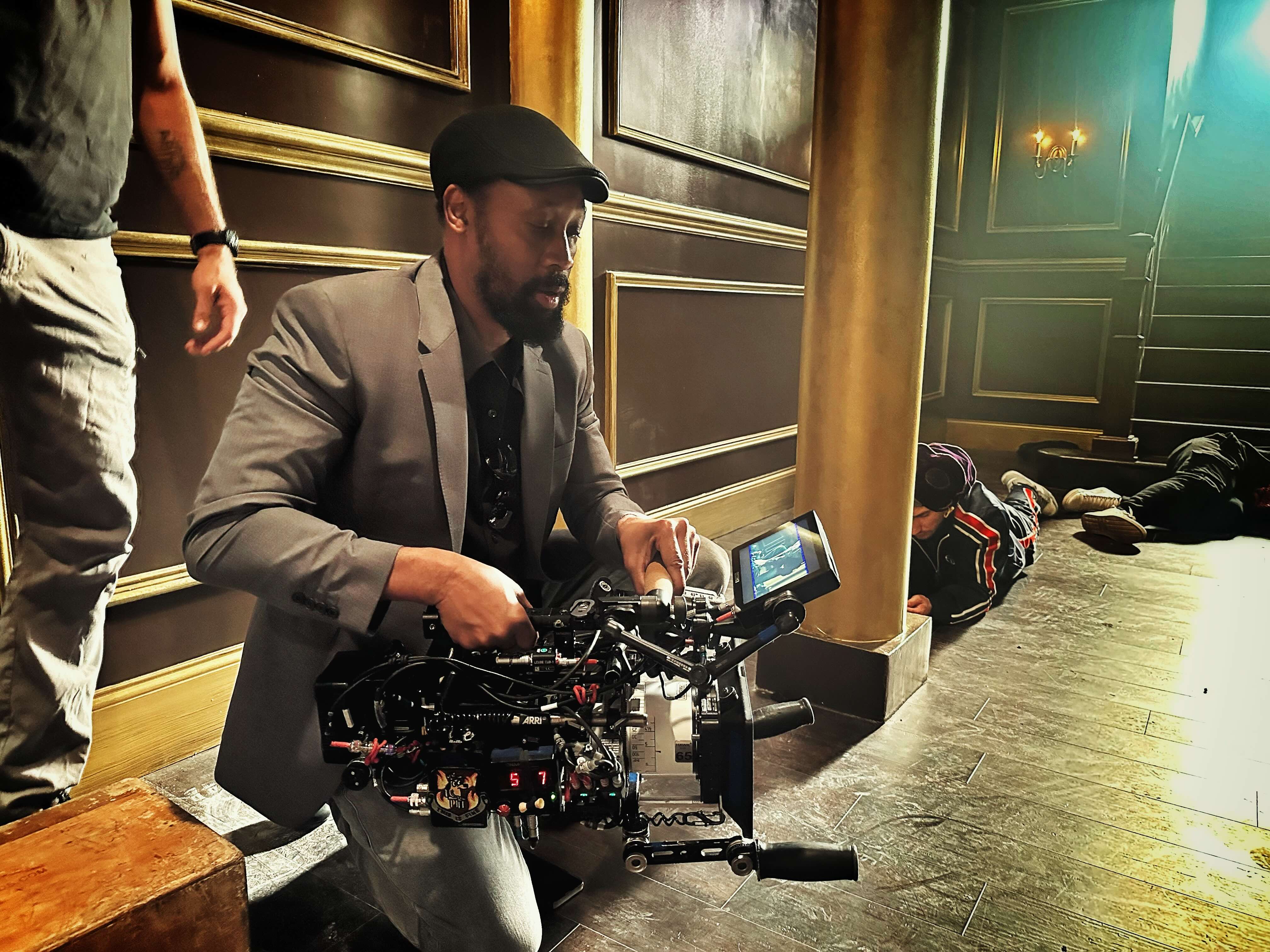
Director RZA holds the camera between takes on set of ONE SPOON OF CHOCOLATE. Image courtesy of Brandon Cox.
Enter the Dragon comes up in almost every conversation Cox and RZA have. The 1973 Bruce Lee film is where both of them start when they talk about screen combat. First Blood works on him differently. “[First Blood], not as much from the visuals, but when I read the script, [First Blood] stood out to me as a clear parallel to this story.” A veteran pushed past the point of return.
Alan Parker’s Mississippi Burning, shot by Peter Biziou, BSC, who won both the Academy Award and BAFTA for that work, was a touchstone for the film’s racial violence and institutional corruption. Scott Cooper’s Out of the Furnace, photographed by Masanobu Takayanagi, photographed with a working-class grain that sits close to Unique’s world. Andrew Dominik’s Killing Them Softly, photographed by Greig Fraser, ASC, ACS, went on the list for what it does with violence - the film’s central beating shot at a 45-degree shutter angle, maximum visceral impact, minimum distance.
Alejandro G. Iñárritu’s Biutiful, shot by Rodrigo Prieto, ASC, AMC - its desaturated palette and refusal to pull the camera back from physical suffering - shaped how Cox approached the film’s bleakest material. Todd Phillips’ Joker, lensed by Lawrence Sher, ASC, the same cinematographer who mentored Cox at AFI and later founded Shotdeck, showed what a street-level revenge film looks like when the visuals stop behaving naturalistically.
The most specific reference point is a 1980 Italian horror film. Doctor Butcher, M.D., a hybrid cannibal-zombie exploitation picture that provoked riots during its U.S. grindhouse run on 42nd Street, came from RZA, not Cox. Cox’s initial reaction was that it was too cheesy. But he watched it again with uncritical eyes and found what RZA was pointing toward: surgery shot like butchery, without distance, the camera right in it, mapping directly onto One Spoon’s black market surgeon subplot.
Cox pulled specific shots from the film and recreated them for those sequences. RZA pulled something out of a film Cox had written off. “RZA, like Quentin, is a true cinephile,” Cox says. “He’ll come up with the most out there deep pulls, out of nowhere.”
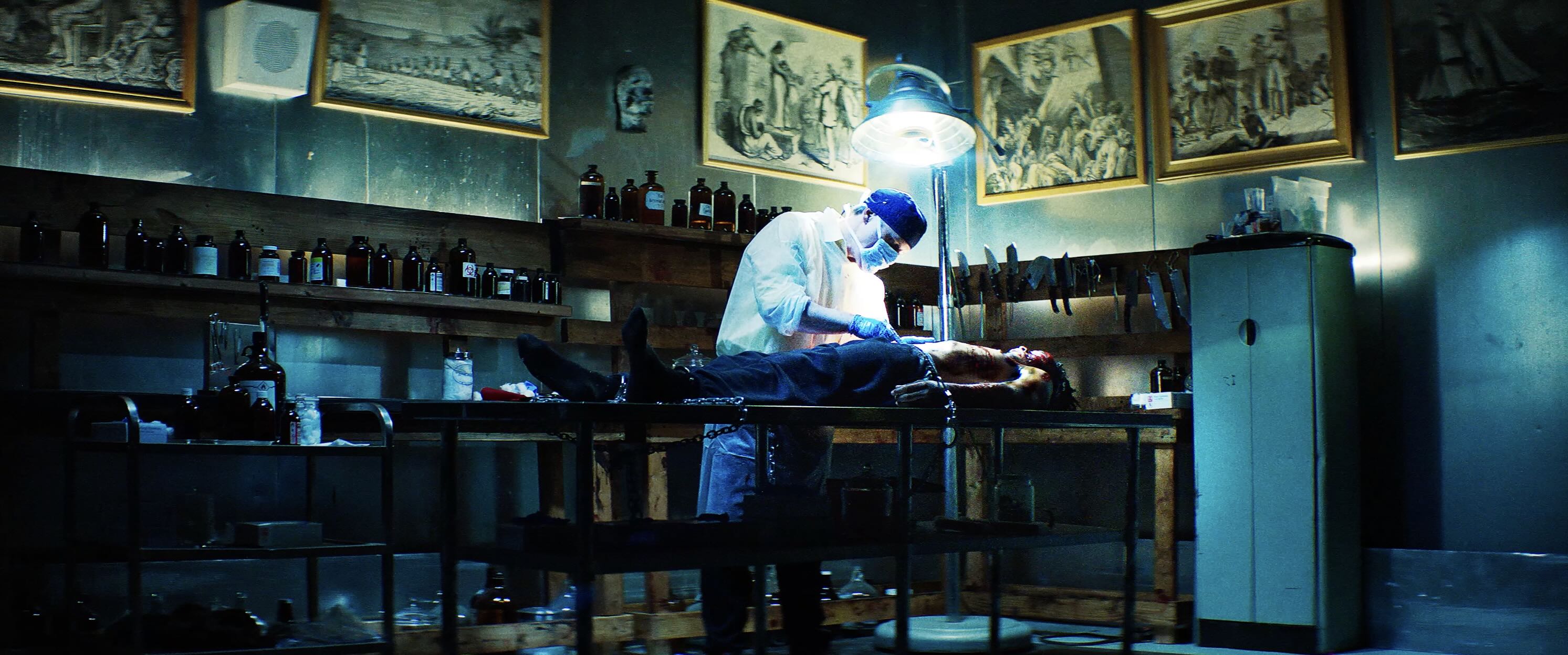
A frame from ONE SPOON OF CHOCOLATE directly inspired by Doctor Butcher, M.D. Image courtesy of Brandon Cox.
The Shotdeck Method: How Cox and RZA Build a Film’s Look
Before a lens is chosen or a lighting plan is drawn, Cox boards the entire film using Shotdeck, the searchable, Blu-ray-quality film still database founded by his mentor Lawrence Sher, ASC. He pulls over a hundred sheets of frames covering the full arc of the production, prints them, and works through them with the director until the film has a visual language. “I basically board the whole movie using Shotdeck,” he says, “printing out over a hundred or more different sheets of content, and from there it’s how we build the overall look and aesthetic together with the director.”
Cox prints those sheets out and lays them in front of the director. That conversation is where the look gets built. Shotdeck makes that conversation possible because it organizes by image rather than genre or era, so a frame from “Doctor Butcher” ends up next to a frame from “Mississippi Burning” and the connection is obvious.
The Lens Decision: Hawk V-Lite Vintage ’74 Anamorphics
Mel Mathis, Senior VP of Marketing at Keslow Camera, has worked with Cox across camera houses since his music video days. She is the first call he makes when a job runs through Keslow, and their working relationship long predates One Spoon of Chocolate. For this production, Keslow supplied the complete camera, lens, and accessories package.
Cox has shot anamorphic long enough that rental houses know what’s coming before he calls. “People that know me, they all know I shoot anamorphic. I’m like, oh, Brandon Cox, that’s the anamorphic guy. [Other camera rental houses] know when I’m calling, Mel knows when I’m calling.” Before settling on glass, he wanted to walk RZA through what anamorphic lenses actually look like across a range. Cooke anamorphics at one end, higher-character glass at the other. The director needed to see what he was choosing. They landed on the Hawk V-Lite Vintage ’74s.
The Hawk Vintage ’74s are difficult to secure. Manufactured by Vantage Film GmbH in Weiden, Germany, the lenses apply vintage 1970s coatings to the standard V-Lite base optical design, producing reduced contrast, enhanced flare behavior, soft edge distortion at wide apertures, and the kind of highlight ghosting that doesn’t so much fail gracefully as succeed by failing. Their 1.3x anamorphic squeeze factor and compact, lightweight form factor suited the mobile, handheld-forward approach Cox had planned from the start. Keslow stocks the ’74s specifically; Cox asked Mathis for them knowing availability was uncertain.
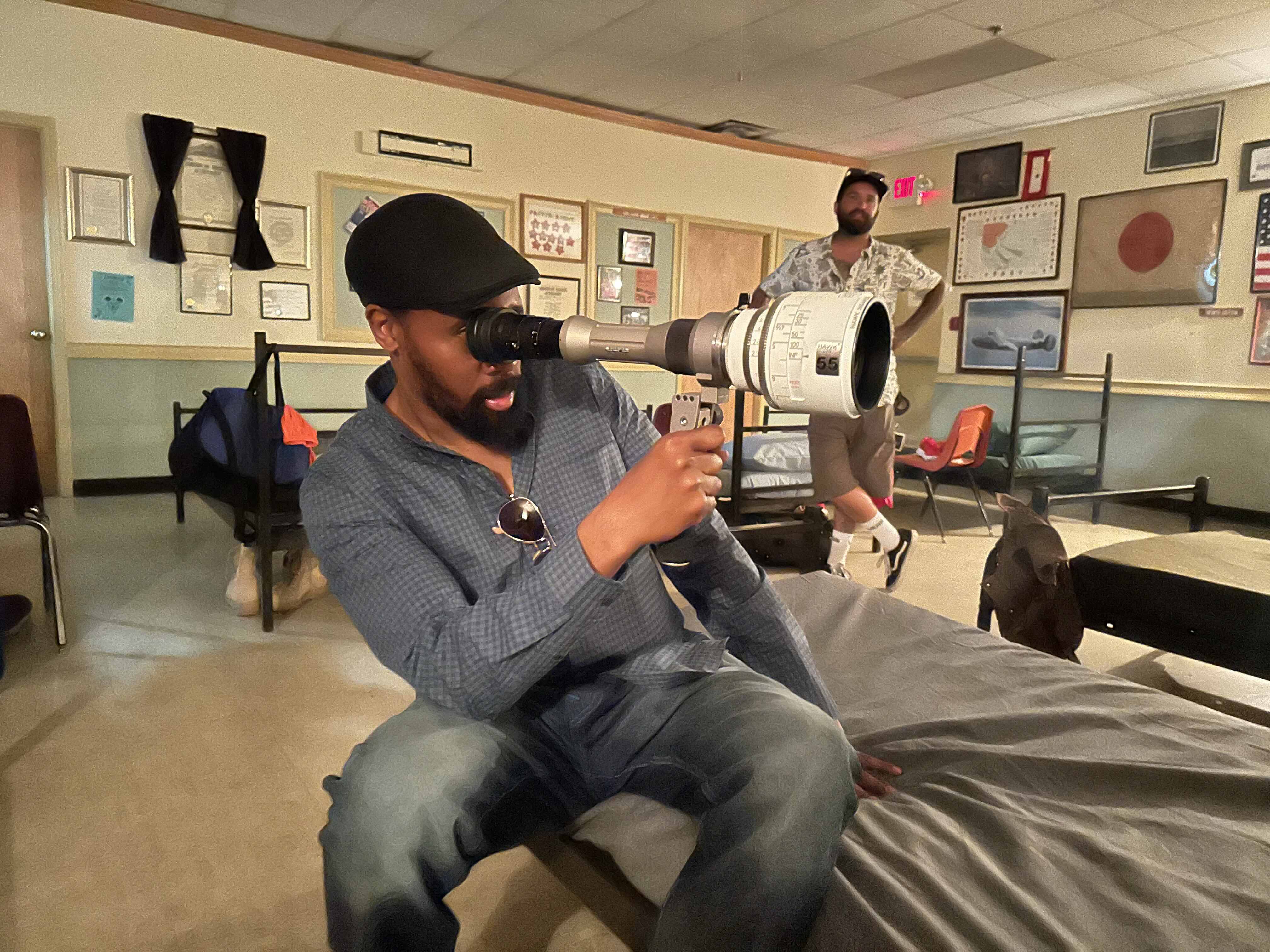
Director RZA peers through a Hawk V-Lite Vintage 74 director's viewfinder on the set of ONE SPOON OF CHOCOLATE. Image courtesy of Brandon Cox.
“She found them,” Cox says. “She said, ‘Yeah, they’re available for your time.’ And it just worked out perfectly. Mel made it happen. [Keslow] always goes the extra mile.”
Operating the Action: Handheld, Impact, and the Camera as a Participant
The camera was ARRI Alexa Mini. “I tend to prefer Arri cameras, over say, RED,” Cox says. A lot of that preference is familiarity, and he's upfront about it. “It’s about familiarity, instinct, and ease of use.”
They needed to move constantly. The grade was going to be hard; the capture needed the latitude to hold up under it.
Cox operated A camera himself throughout. For Steadicam work he had Chris Smith, who was on for roughly fifty to sixty percent of the shoot; Trevor May ran B camera. First ACs Jon Milagrano on A and Colin Schostak on B, with Tristan Hallman and Lily Sanders as seconds, maintained focus through a production that rarely stood still.
For all action sequences the approach was handheld, and Cox’s twenty-four years of martial arts training meant he understood the choreography from the inside. Before shooting began, he spent several days embedded with the stunt team, working camera movement directly against their blocking. The stunt coordinator was Marrese Crump, who had previously worked with RZA on The Man with the Iron Fists and trained Chadwick Boseman for Black Panther.
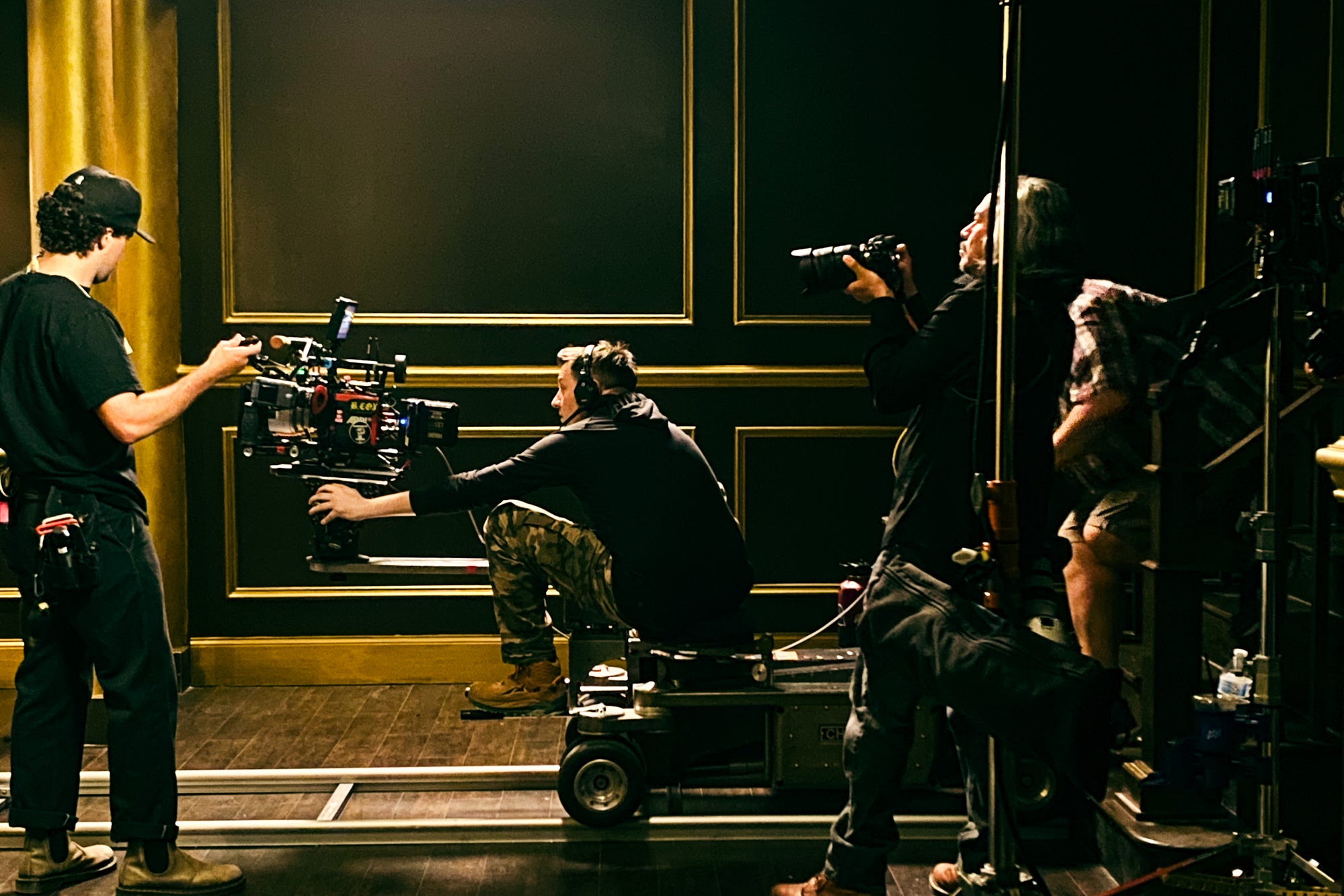
DP Brandon Cox mans a dolly between takes of ONE SPOON OF CHOCOLATE. Image courtesy of Brandon Cox.
Crump is the only American protégé of Master Panna Rittikrai, Tony Jaa’s trainer and the choreographer behind Ong-Bak and The Protector. He brought fighting disciplines most Western stunt coordinators have never trained in. Cox’s martial background let him operate at the proximity and tempo those sequences required.
“I really loved how every person was essential on that team,” Cox says. “I couldn’t really pinpoint one person.”
“There were multiple moments where I would shake the camera to simulate the added force from the blows, to add intensity and viscerality.” In a scene lit with blacklight, he was physically vibrating the lens to simulate impact.
Into the Grade: Grain, Saturation, Grit
The on-set work was always going to be pushed harder in post. The plan from the beginning was to drive the grade hard: color, saturation, contrast beyond the digital baseline, and grain to close the gap between the Alexa Mini’s native image and the 35mm feeling the production was working toward. The same exploitation films that shaped the visual references shaped the finishing. He went all the way in.
DIT Chad Oliver was central to how the look was built in real time. Cox and Oliver ran live, on-the-fly grades throughout production, building the film’s visual tone in real time. By the time they hit the post suite, the direction was set. “Not having Chad, I wouldn’t be able to get the look,” he says. The images needed to be, as he puts it, “as striking as possible.”
Three Images I Carry
Cox has three images he comes back to when discussing One Spoon of Chocolate.
The one that became the poster: Unique descending a staircase, a circular window behind him, warm backlight through the frame. “I think that’s such an iconic image.” He believed in it when he made it. It became the poster.
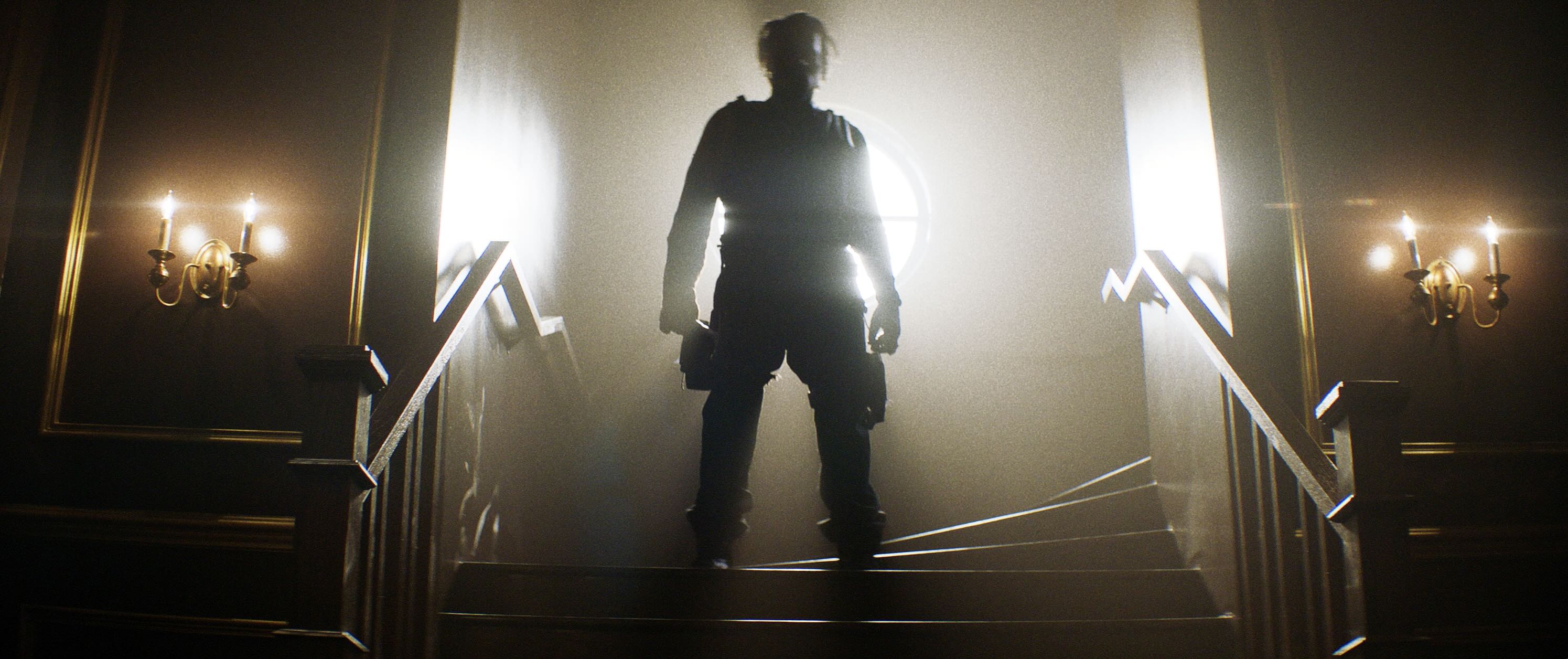
Shameik Moore as Unique in ONE SPOON OF CHOCOLATE. Image courtesy of Brandon Cox.
Then there’s the field sequence, Unique running in backlit haze, grass catching the light low, smoke holding exactly at mid-level. Gaffer Eric Munk’s team built the lighting infrastructure; key grip Jake Alvarez, who came to One Spoon off productions including Black Panther and Spider-Man: Homecoming, built the rigs that made it possible. Then the weather had to cooperate.
“The haze and the smoke just happened to sit right above the weeds and not rise up,” Cox says. “It sort of stayed at mid-level there, and having that huge backlight, it worked out perfectly.”
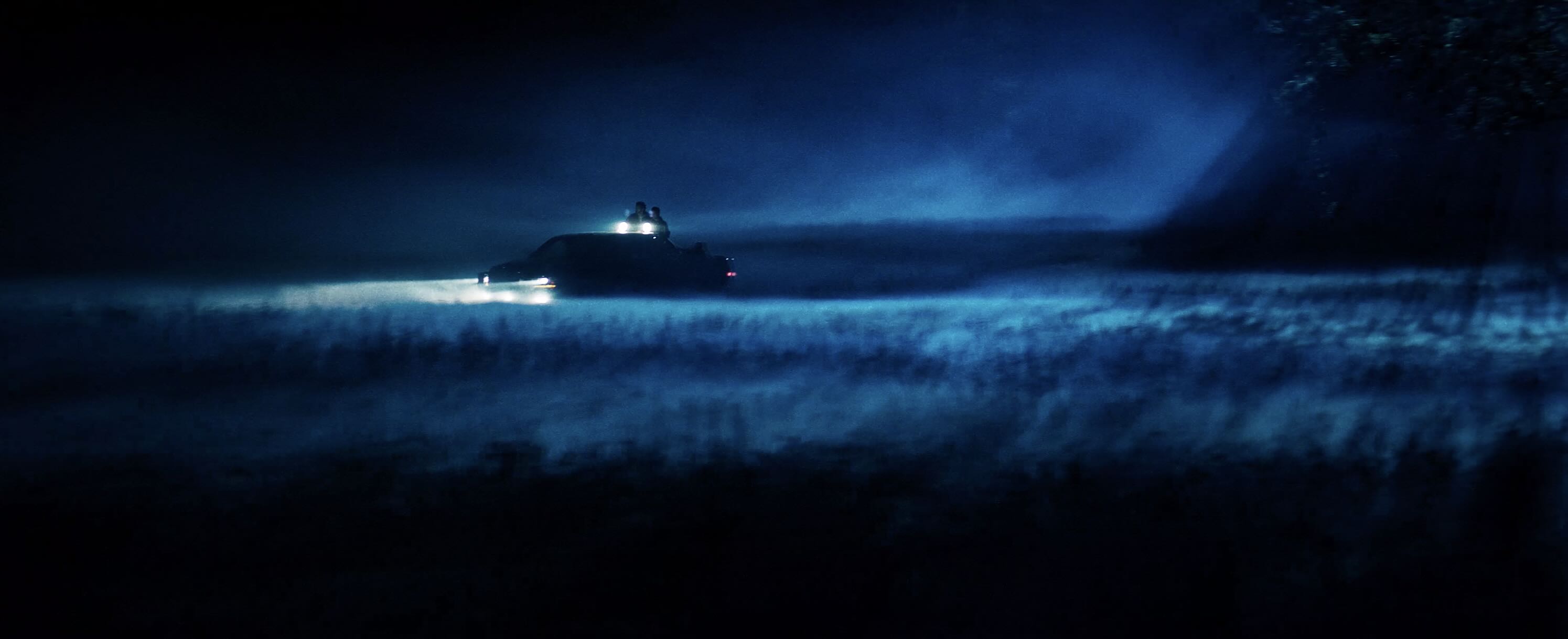
A still from the cornfield sequence in ONE SPOON OF CHOCOLATE. Image courtesy of Brandon Cox.
And the prison gate wide: Unique walking up a hill, the penitentiary gate opening as he reaches it. “There’s something about that image. I just think it’s super cool.”
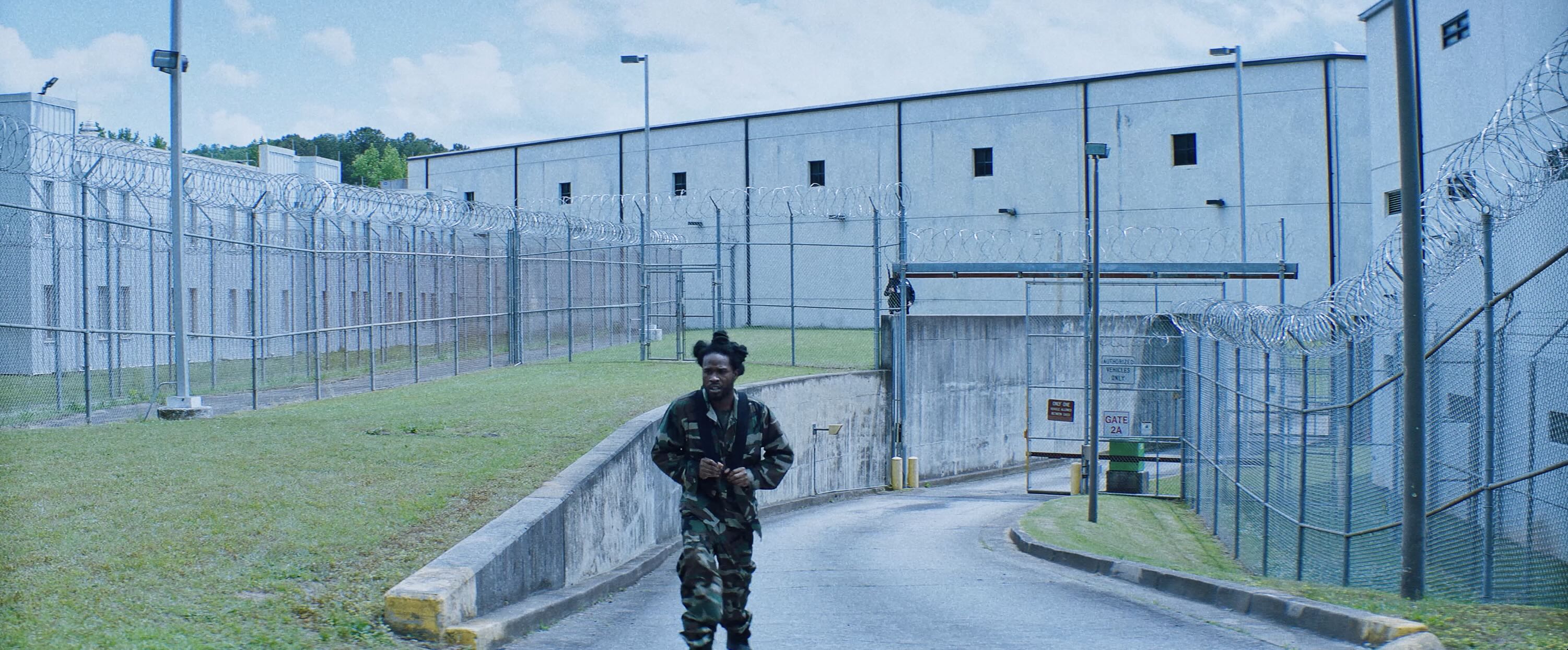
Shameik Moore as Unique in ONE SPOON OF CHOCOLATE. Image courtesy of Brandon Cox.
“Bobby, I Think You Made a Movie More Violent Than Mine”
The Quentin Tarantino Presents credit has a specific origin. RZA composed the scores for Tarantino’s Kill Bill films; Tarantino presented RZA’s directorial debut, The Man with the Iron Fists, in 2012.
“RZA is the pupil of Quentin Tarantino,” he says. “That’s how he learned how to make movies. That’s his film teacher.” When the finished cut was shown to Tarantino, RZA held back the details of who had watched it.
Cox was in New York for another screening when the call came. “He said, ‘Hey, the Godfather just watched the movie.’ That’s what he calls him.” Cox pressed. “He goes, ‘Well, it wasn’t just him.’” Then: David Fincher. “I held my heart. I almost had a heart attack.”
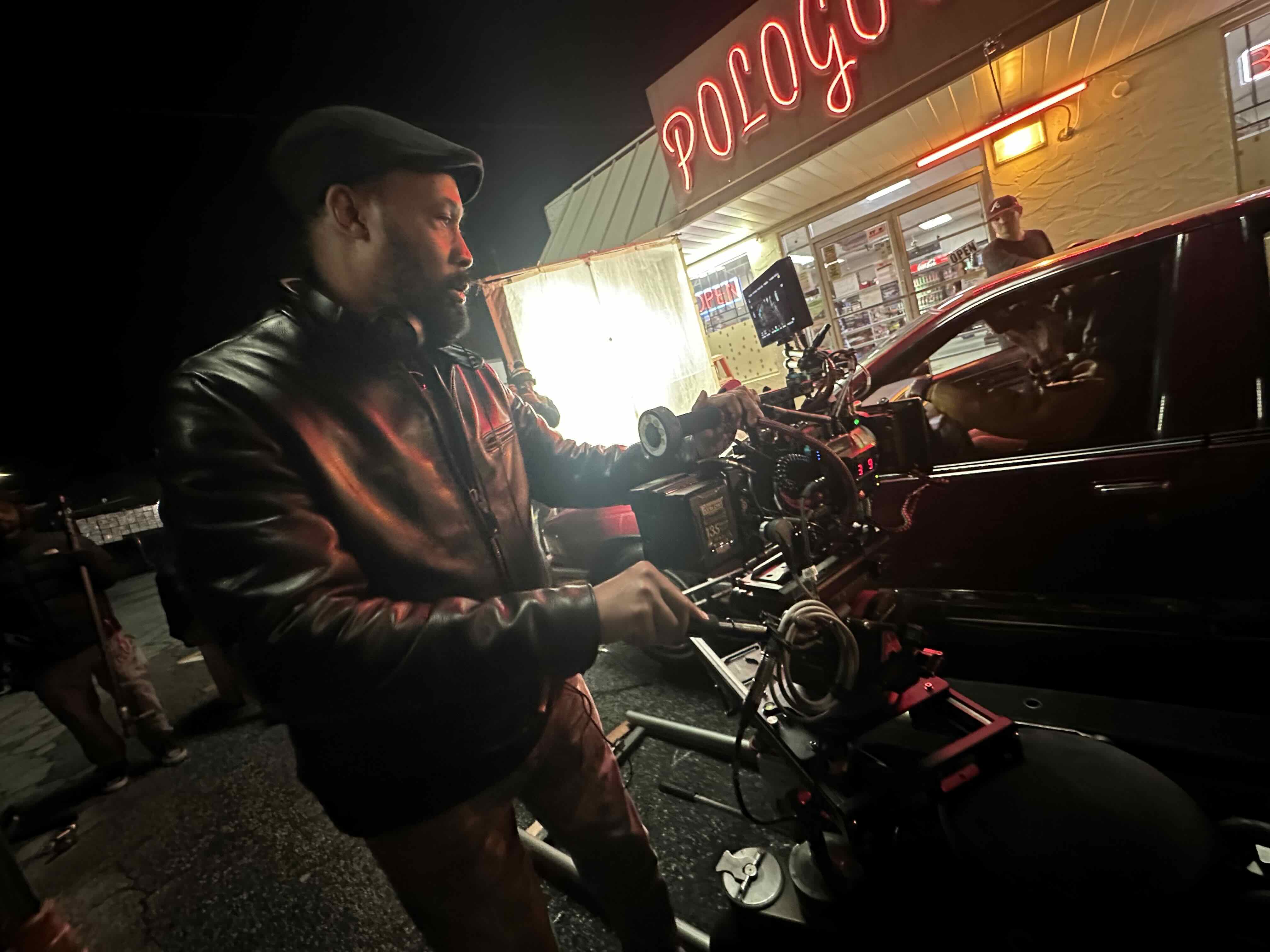
Director RZA mans the camera on set of ONE SPOON OF CHOCOLATE. Image courtesy of Brandon Cox.
Tarantino, according to RZA, wouldn’t stop talking about the film. Best revenge movie he’d seen in ten years. To RZA, Bobby Diggs, he said: “Bobby, I think you made a movie more violent than mine.”
“He was proud of RZA. He just wanted to see him shine.” The Quentin Tarantino Presents credit came from there. So did the phone call Cox will be telling people about for years.
The images landed. The violence, the grain, the 1970s glass, the camera vibrating in his hands as if it were taking the same hits as the people in the frame.
“I had so much fun making this movie,” Cox says. “I hope it comes across to the audience.” It took RZA thirteen years to get One Spoon of Chocolate from announcement to screen. The conversation about what they do next is already well underway. [x]