
The Cinematography of "The Pickup" with DP Larry Blanford

DP Larry Blanford, and “B” camera operator, Jessica Lakoff Cannon, behind the camera on the set of The Pickup. Photo courtesy of Louis Smith.
THE PICKUP, starring Eddie Murphy, Pete Davidson, and Keke Palmer, is a riotous action-comedy following a mismatched pair of armored truck drivers as they attempt to subvert a daring heist. Since its premiere, the film has skyrocketed to the Amazon Prime Top 10 worldwide. We spoke with DP Larry Blanford about making THE PICKUP a reality, from shooting on an LED volume, to working with an extensive second-unit team for dramatic car stunts.
The film is incredibly entertaining, with a sharp mix of comedy and action. The spectacle really shines in the set pieces. I wanted to start with the cameras and lenses—you achieved a crisp, very clean image throughout. There’s even some striking slow motion early on, particularly during Pete Davidson’s character’s bank pickup sequence. What was the testing process like in deciding on lenses and cameras, and what qualities were you aiming for?
For me, the camera choice mattered more than the lenses. I wanted a clean image because I wasn’t planning to filter much in-camera. Instead, I softened selectively later in the DI, letting some practicals blow out slightly. Since there were visual effects involved and all the armored car interiors were stage work, I needed the cleanest plates possible.
We shot volume, and I knew I didn’t want to “marry” the plates too early. Shooting nine cameras at different speeds—20, 30, 50 mph—creates so much material for VFX to process, so I opted for the most neutral, crisp base image possible. That’s what drove the lens decision.
As for the cameras, the RED V-Raptors were light, and I shot in 6K. Honestly, most viewers wouldn’t notice a difference between RED, Alexa, or VENICE, but RED gave me portability with plenty of light at 800 ASA. Inside the armored car, space was tight, so running three cameras required something compact. I’ll never forget the first time I picked up the V-Raptor—it was so light, I turned to my operator, Jessica Lakoff Cannon, and joked, “You’re welcome.” (Laughs) The VENICE 2 is fantastic, but it’s a beast unless you use Rialto mode. RED was just the right fit for our confined setups.
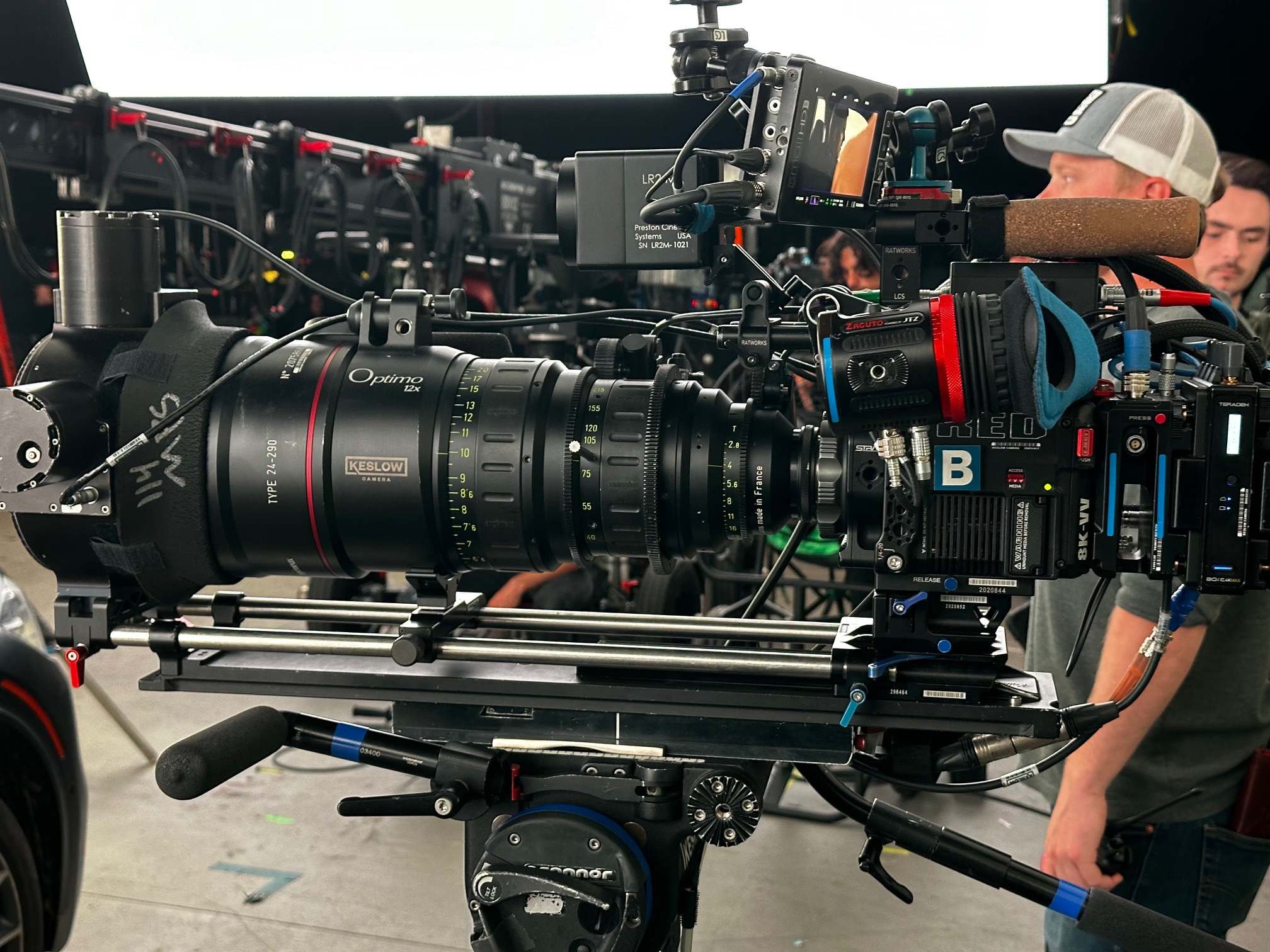
A fully build RED V-Raptor rig with an Angenieux Optimo Zoom on set of The Pickup.
Photo courtesy of Louis Smith.
The volume blends seamlessly with the road footage. What were the key considerations in shooting those scenes?
I tested for a week once the volume was built. With volume, you can light from the wall itself, but often you need to black out areas. One thing I dislike is overdone reflections—mirrors, passenger windows, that sort of thing. I tried it briefly, but found it distracting from the actors. After the first day, I dropped it almost entirely.
We used Image Shakers to create subtle vibration levels for driving shots. I had all the operators on wheels with set frequencies—gentle when cruising, more intense during heavy action. Sometimes I mounted the camera on a crane for movement, or zipped lights on a rail system to simulate a more “sun” like spectral light.
It was all about introducing motion into a fixed armored car environment. When its done green screen, VFX prefers to add the movement in post so but I if I can, I prefer to do it live. With volume, I could shape it in-camera. That kept it feeling real.
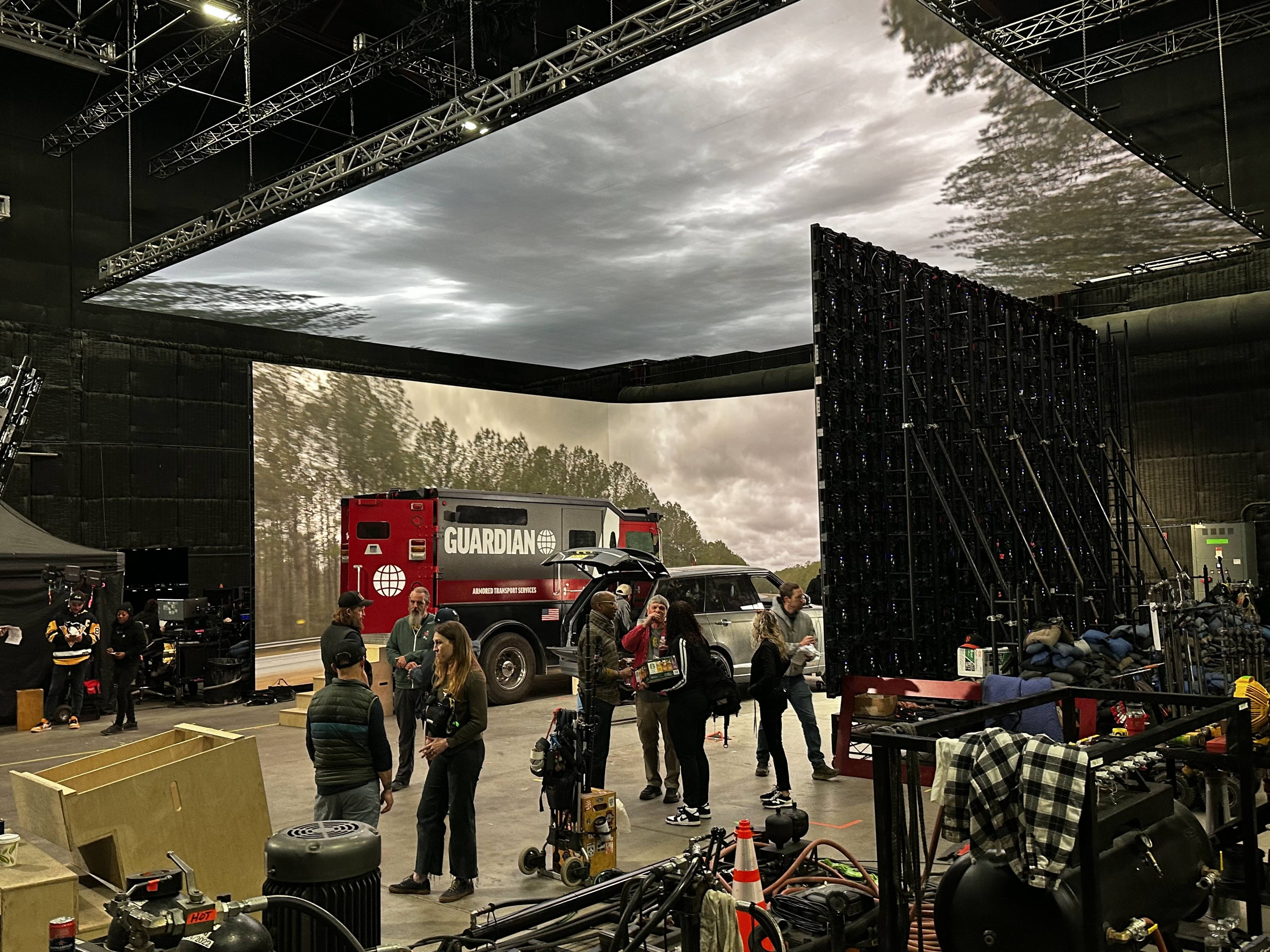
The armored truck on the LED volume wall stage, on set of The Pickup.
Photo courtesy of Nick Hood.
The film features Steadicam, sweeping aerials, and dynamic tracking shots. How did you approach movement?
My philosophy is: “Movement begets movement.” I only move the camera when it feels motivated. Tim Story (the director) and I don’t really rely on formal shot lists—we keep our options open. With this particular script, I didn’t feel the need to carry Steadicam full-time.
We “day played” a Steadicam when needed, but often what looks like Steadicam was actually a dolly with a stabilized head. Out of 45 days, we used Steadicam maybe seven or eight days. Regarding the drone work, we did a bit on the Main Unit but 2nd Unit used it quite a bit and that team from “White Rabbit” just absolutely nailed it. Some of the best “action” drone work I’ve seen, ever.
The stunt work is impressive. How did you collaborate with the stunt and second unit teams?
It was very symbiotic. With a script like this, second unit is critical. We prepped a full shot list of the action before the strike, then worked with second unit director Steve Ritzi and DP Sid Sidell, ASC, along with a storyboard artist.
We knew the second unit needed drones, arm cars, and multiple camera’s every day—not just on select days—so as a team, we convinced production that was the best way to approach it and hats off to our producer Ross Fanger and PM Cory Sklov as they were able to lock that in with the vendors.
Also, hats off to our 2nd Unit DP, Sid Sidell, ASC, who inherited the boards but brought years of experience to make the sequences even better. For me, marrying a 2nd Unit to the Main Unit is truly embracing that second unit. Help them help you.
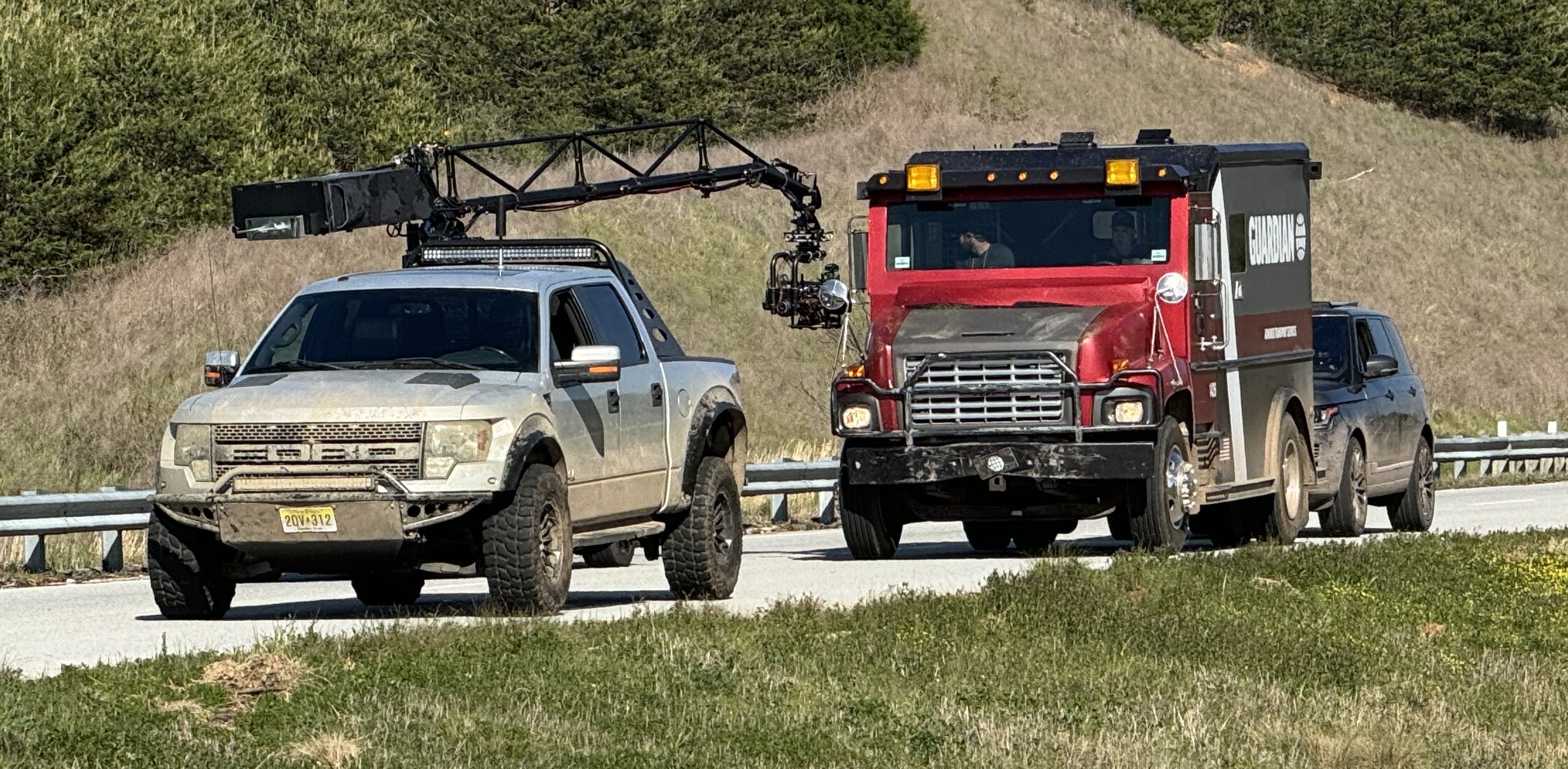
The second-unit team shoots the armored truck on location for The Pickup.
Photo courtesy of Bodie Orman.
How did you approach the stylized interiors, such as the teal lighting in the mechanic's shop?
Honestly, some of it was just Tim and me saying, “Let’s have fun.” The chop shop was one, with amber welding shields and cyan base lighting. Other times, like Marshawn Lynch at the safe, we leaned yellow.
Our production designer, Clay A. Griffith, was great about adapting sets to camera needs. I’d ask for overhead sight lines, windows, or removable walls to open the space up and they never flinched. Always a “whatever you need” mentality.
The finale gun battle was intense. How did you prepare for VFX-heavy moments?
Almost everything was practical. The only CG element was the muzzle flashes. I shot much of it at 48fps with a 360° shutter, giving us flexibility to use footage at 24fps or ramp between speeds without introducing staccato. We storyboarded the entire sequence and shot it on a closed airport tarmac outside Atlanta. Keeping as much as possible in-camera gave the sequence its weight.
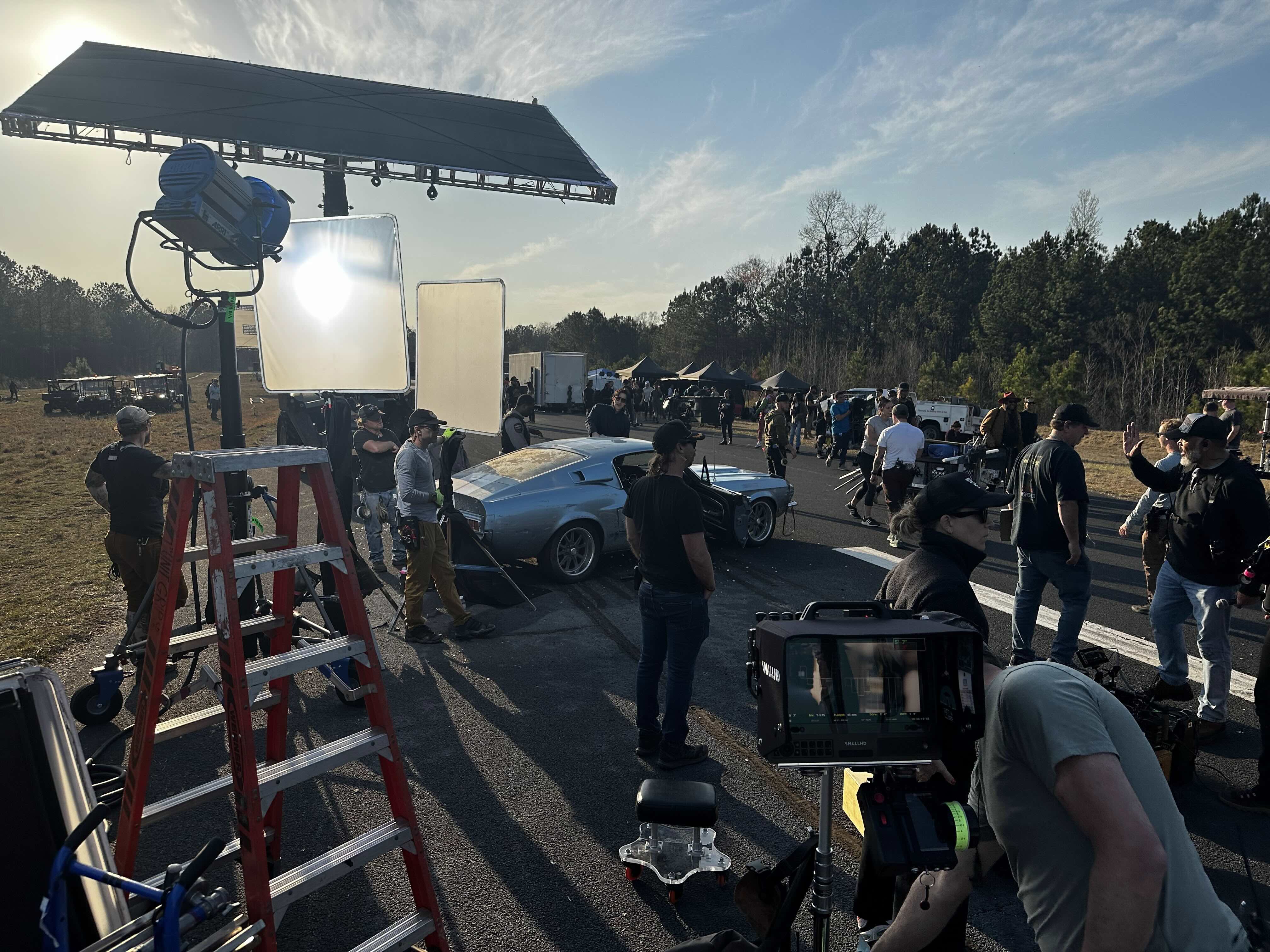
On set for the finale gun battle in The Pickup.
Photo courtesy of Nick Hood.
On the comedy side, how did you cover the rapid-fire dialogue and improvisation?
With comedy, you want to capture lightning in a bottle. Sometimes a comedian gives you gold once and never repeats it. I often ran three cameras—masters and overs simultaneously—to cover improvisation without missing anything.
Working with Eddie Murphy and Pete Davidson was a gift. Their chemistry was infectious, and when they broke into laughter, so did we. Running multiple cameras ensured we didn’t lose those spontaneous moments. Our director, Tim Story, sets a tone of professionalism, but also fun—it kept the whole set lighthearted.
Is there anyone you’d like to spotlight from the crew?
Absolutely. My “A” operator, Cooper Dunn, and “B” operator, Jessica Lakoff Cannon, were indispensable—always asking, “How can we make this great?” Our camera team—Keith Pokorski, Louis Smith, Marie Morrell, Erika Haggerty, and Katie Easley—brought skill and positivity every day.
Second unit director Steve Ritzi and DP Sid Sidell, ASC, deserve huge credit. Their work integrated seamlessly with ours. It was one of those productions where we often wrapped early because we got everything we needed. That’s a sign of trust, efficiency, and a great crew.
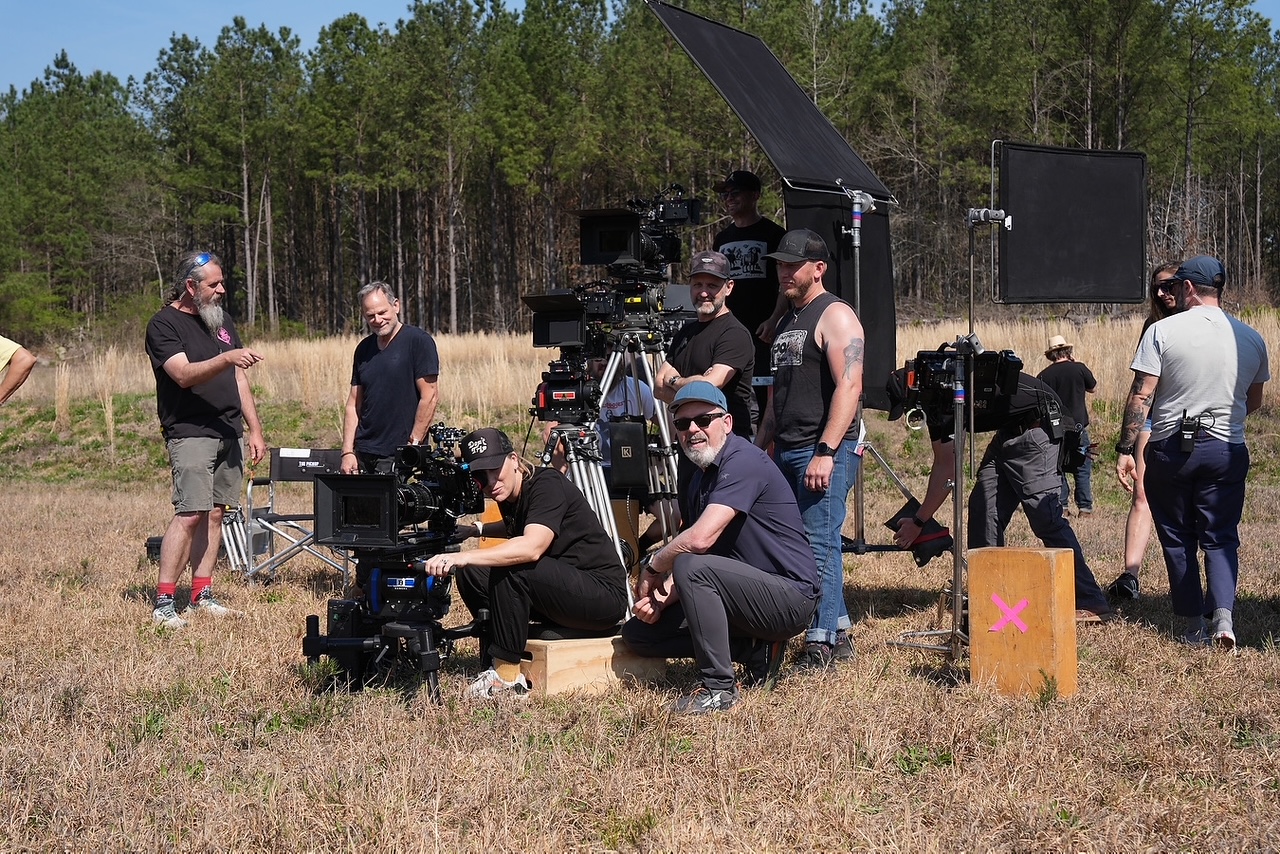
DP Larry Blanford and crew prepare to film the pivotal airport sequence.
Photo courtesy of Louis Smith.
You’ve long worked with Keslow Camera. What was that collaboration like here?
I’ve known Robert Keslow for years, back when the company was just a small shop. They’ve always prioritized supporting filmmakers over chasing the dollar. With The Pickup, we didn’t even take the package out for bid—we just went with Keslow because we trusted them. Fair deals, great gear, and a human touch.
Finally, what advice would you give DPs making the jump from second unit to first unit?
Honestly, I never felt like I “transitioned”—I’ve always done both. The biggest lesson is preparation.The stunt collaboration, and careful planning are key. And listen to the stunt coordinators and second unit directors—they often know the best camera positions for action better than you do.
Also, study the main unit’s dailies to match their lighting style and visual tone. Seamlessness matters more than showing off. Fight for prep time, build strong relationships with your second unit, and never be afraid to simplify. At the end of the day, it’s about collaboration, not ego. [x]
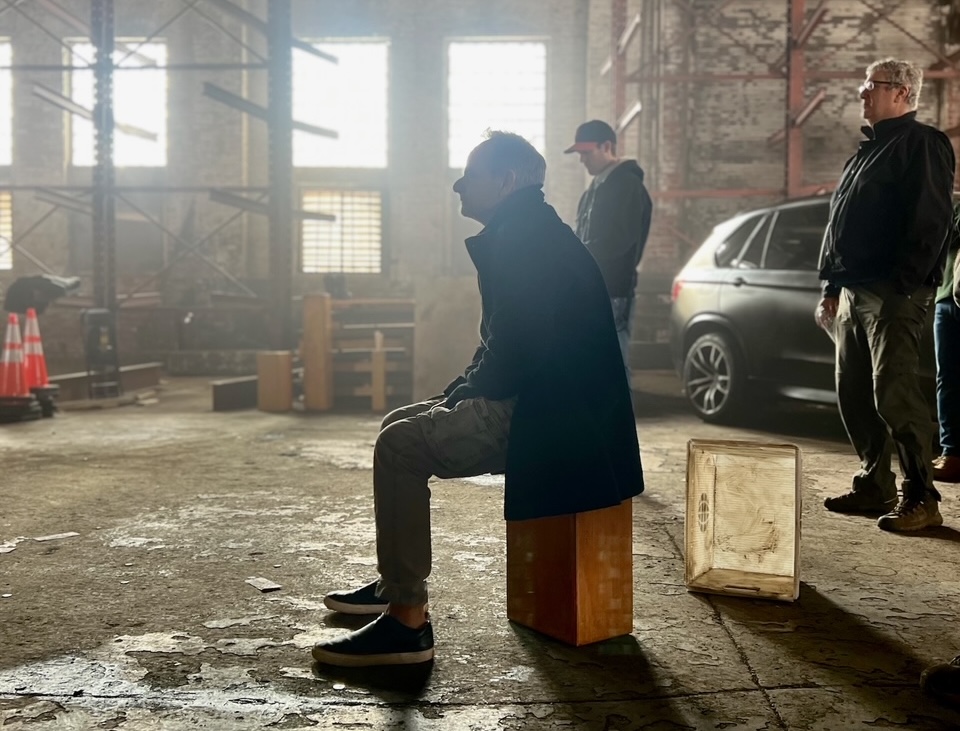
DP Larry Blanford on set of The Pickup between takes.
Photo courtesy of Louis Smith.