
The Cinematography of "The Paper" with DP Chloe Weaver

DP Chloe Weaver adjusts a zoom lens on set of "The Paper" season one. Photo courtesy of Chloe Weaver.
Peacock's THE PAPER, the side-splitting new comedy from the universe of THE OFFICE, made a major splash upon its premiere, debuting in the Top 10 most streamed series' on the platform.
We caught up with DP Chloe Weaver (episodes 4-10) to discuss the journey of bringing THE PAPER to life, from reinventing the iconic mockumentary style of THE OFFICE, to working closely with an all-star cast and crew.
The series is super charming, and the cinematography really grounds it with the mockumentary style. What was the journey that you had to come to this project and also just the general approach to the look and feel?
The mockumentary style of The Office is so beloved, I knew we’d be harnessing that once again when we made The Paper. That comedic camera language is instrumental to the tone of the show, as is the naturalistic look. We were looking for a way to preserve all these familiar things, while modernizing the approach and giving our show its own look, despite its connection to the original series.
I need to start by giving all the credit to distinguished cinematographer DJ Stipsen, NZCS, who shot the pilot episode, as well as episodes 2 and 3. He has done so much work in this mockumentary style — he's credited with over 30 episodes of What We Do in the Shadows — so he brought along his genre expertise. He designed the show’s look, and then I carried the torch for episodes 4 through 10.
I was uniquely qualified to DP this series because my roots are firmly planted in documentary filmmaking, but I work primarily in narrative projects, so the blending of the two has become my specialty. Mockumentary really fluidly takes from both worlds. My earliest ambitions as a filmmaker were centered around how to make a good documentary, and I’m still driven by that. I’ve been a part of series like Netflix’s Chef’s Table, which premiered over 10 years ago now and has dramatically reshaped the documentary genre as a whole into something more cinematic, but I’ve also made plenty of reality-style docs that tap into a looser sensibility, more similar to The Office.
One tremendous stepping stone that led me to The Paper was having contributed to Netflix’s comedy series American Vandal, which is a mockumentary masterpiece. It was shot by Adam Bricker, ASC, and directed by Tony Yacenda. I was a camera operator on the first season and 2nd unit DP for the second season. That series was fully scripted but presented itself in the form of a true-crime documentary. Its success hinged on appearing real and genuine to audiences. It was a brilliant experience for me to watch Adam and Tony develop a set of rules that governed how we captured scenes authentically, as though it were a documentary. Their use of interviews, stylized B-roll, vérité work, and reenactments built a world that felt very believable.
Years later, I went on to shoot a show called Paul T. Goldman, a documentary project for Peacock created by Jason Woliner. It was there that I really honed my abilities to guide a project that blended narrative scenes with a documentary approach and feel.
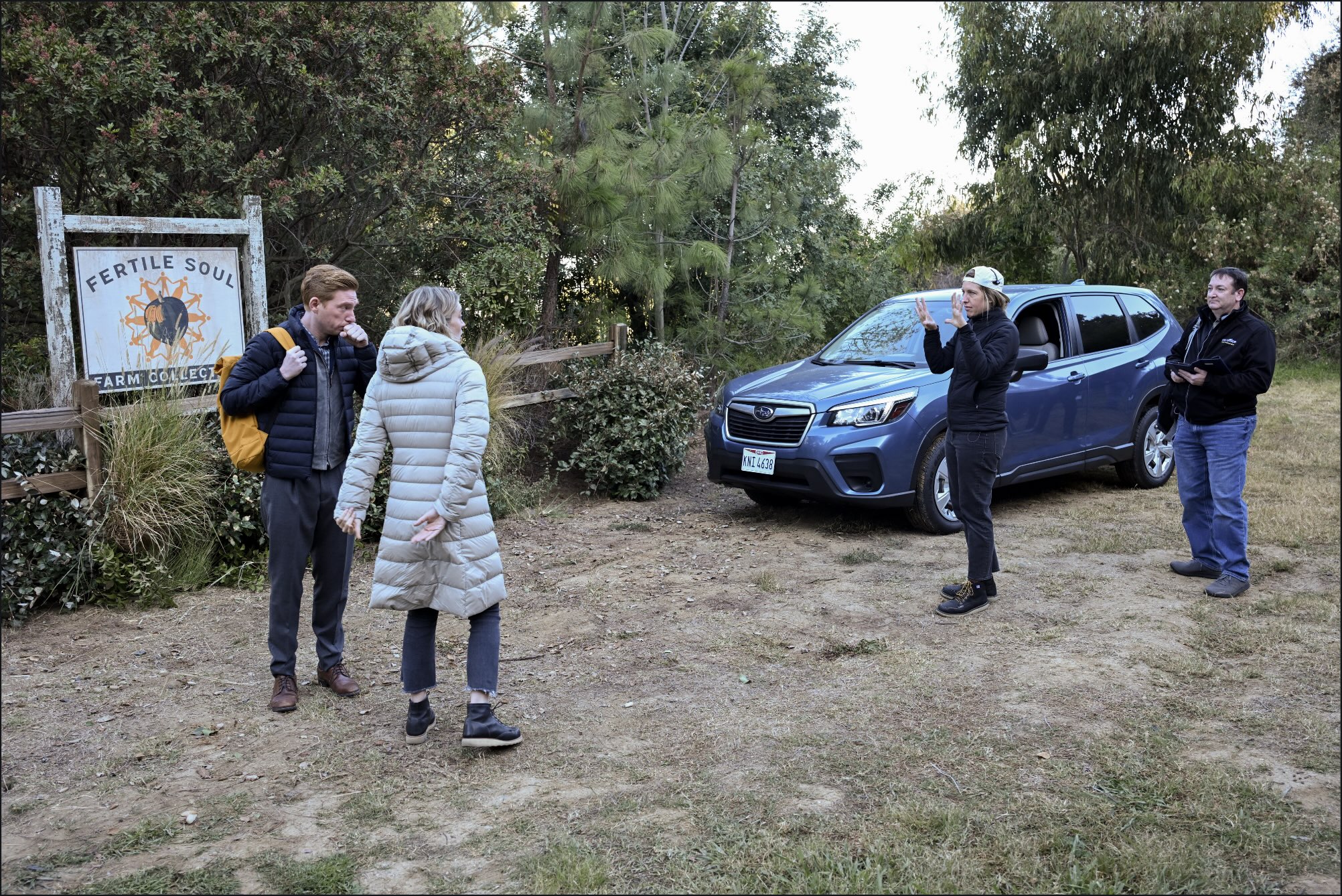
(L-R) Domhnall Gleeson (Ned Sampson), Chelsea Frei (Mare Pritti), DP Chloe Weaver, and director David Rogers on the set of "The Paper" season one. Photo courtesy of Chloe Weaver.
Jason Woliner is, I suspect, the one responsible for getting me in front of Greg Daniels and Michael Koman when they were hunting for a DP for The Paper. Koman and Jason had worked together on various projects with Nathan Fielder, including Nathan for You. I was eager to meet with Greg and Michael, since I was a fan of The Office, and I did feel uniquely capable of taking on the reboot. This was during a time when work in LA was miserably slow — I figured everyone in the world would be interviewing with them. Luckily, we had a fantastic discussion, and the interaction with them both made it clear to me that I had to fight to be a part of it.
Once it was decided that DJ and I would tackle the show together, the biggest discussion was how to portray a current-day “documentary,” since the concept of the show was that the same doc crew that covered the stories from Dunder Mifflin was returning after 10 years. How would things be different, but still familiar? Every filmmaker I know in the documentary space is trying to make their documentary as cinematic as they can, but part of the charm of The Office’s documentarians is their more amateur approach. These filmmakers don’t have the newest cameras or place much focus on aesthetics. They take a more fly-on-the-wall approach: just capturing events and staying neutral. Their grounded and humble camera allowed things to unfold in front of them, in a funny way.
To touch on that comedy element, how much room is there for playing around when you're covering these scenes? What technical choices are you making to give freedom and flexibility to the cast? They're all phenomenal, and I'm sure you want to ensure that they have the freedom to discover moments on set as well.
It's true. The talent of our cast is bonkers, and we wanted to give them a big stage. We decided to cross-shoot everything, which was expected for a show of this nature — allowing us to capture both sides of a comedic performance simultaneously. This is a mode of working fast, which we all saw as a plus, since we often had 10-page days. But it also meant you didn’t get to do as much with lighting.
We generally had 20 minutes between scenes to get cameras into position and be lit, so we were working quickly and trying to embrace what the set gave us naturally — like you would when making a real documentary. The individual office spaces and the conference room required more strategic and directional light from small softboxes in the ceiling, but outside of that, we would slap a couple of basic diffusion boxes up over select fluorescent ceiling lights and call it a day. Anytime I tried to do too much, or make something look more stylized, it would feel wrong and we’d have to reverse it.
To keep the camerawork feeling true, we gave ourselves some rules and limitations. We decided the doc camera team didn’t have infinite resources — they only had two camera operators, and thus, the scenes would only be captured from two angles. We wanted the compositions to feel realistic and not be too privileged or convenient. We liked when the operator would have to fight for their shot, or move around to keep up with the action. This produced a healthy variety in the types of shots we captured too- coverage didn’t feel repetitive. Operators were not allowed to anticipate a joke or a line, they had to be very disciplined and react to the moment as it happened, never punctuate it in advance.
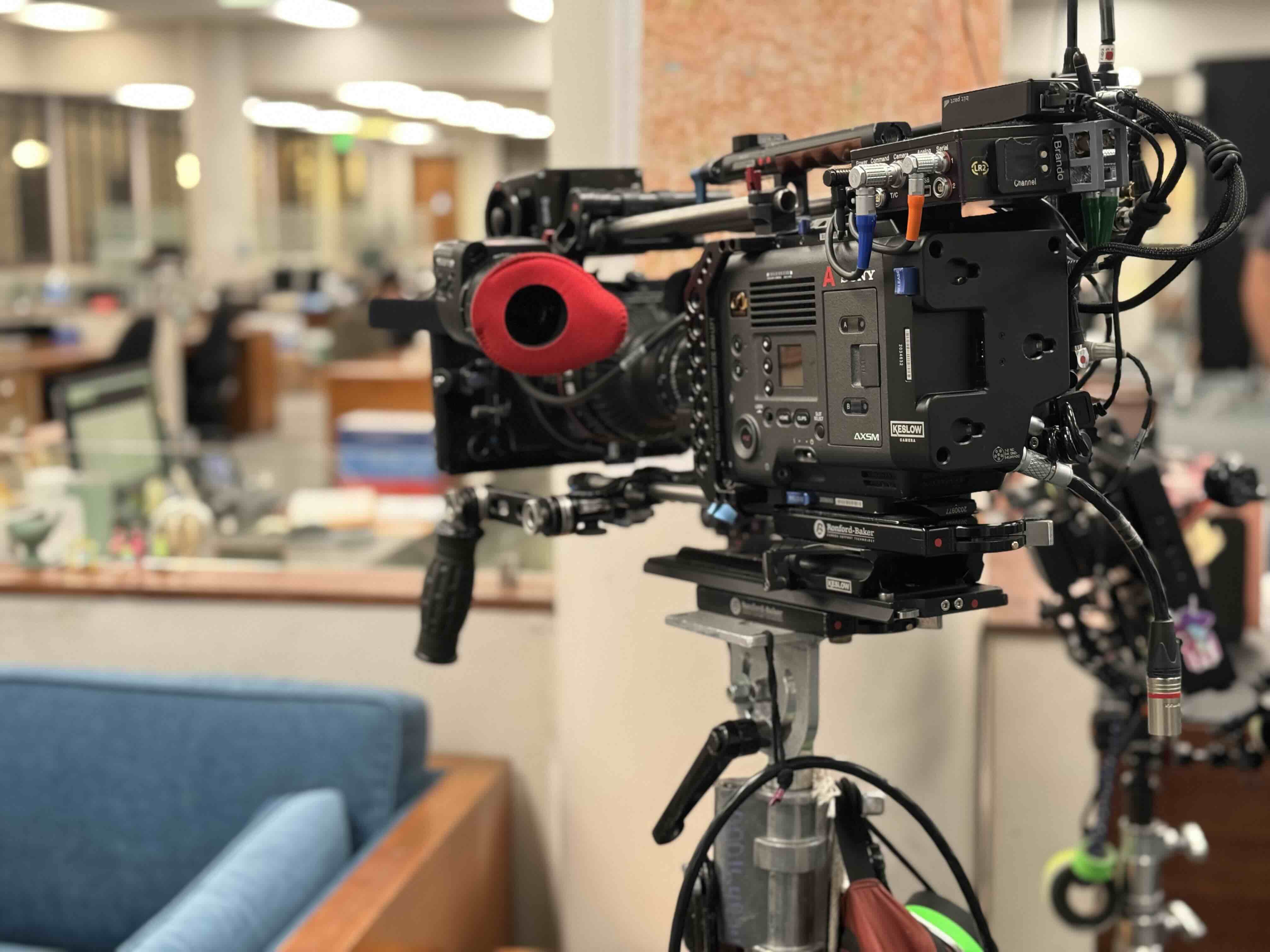
A Sony VENICE 2 on the set of "The Paper." Photo by Ryan Rosenblum.
Generally speaking, the A camera would act as though they were covering the scene alone — gathering coverage in a way that felt instinctual if you were trying to tell the whole story solo. We were lucky to have operators Phil Mastrella and Mande Whitaker, who made a scene feel new every time while still nailing the timing on beats that were more precise.
Their role on this series really can’t be overstated — the operators are characters themselves, and their individual instincts form the show's comedic make up. Since the cast often addressed the camera directly, or shoot over a look, more subtly, operators had to remain very playful and present.
There’s even a moment in the series where Ned looks right at the camera and he says, "Mande,” he addresses her by her name in the show.
Which I love. She deserves the shoutout!
Obviously this operating style is not new... This approach has been perfected by other people long before us. But we did take a lot of pride in finding ways to make it our own.
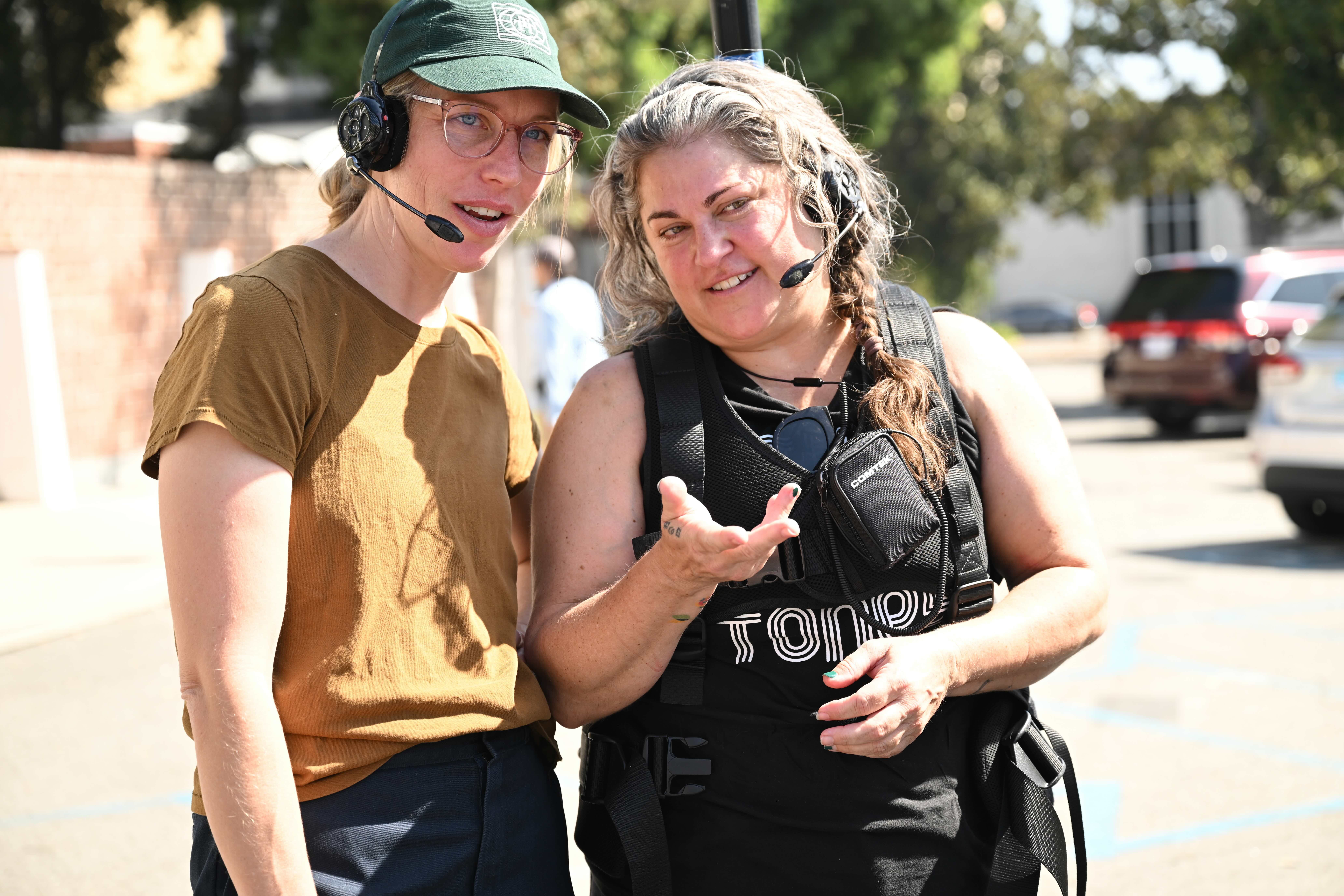
(L-R) DP Chloe Weaver and Camera Operator Mande Whitaker. Photo courtesy of Chloe Weaver.
Another element that was super unique is that there's a little bit of mixed format shooting, between digital and celluloid. What was the decision making there and what was that process like?
DJ gets the credit here! He made the excellent choice to shoot 16mm film on an Arri 416 for the flashbacks sequences which showed off a nostalgic and prosperous time for the newspaper back in the 1970’s. It’s a great contrast to our current day Venice footage which he took in a more desaturated direction to reflect the state of their operations now.
In the first episode we meet our cast of amateur journalists and they work in the shell of what once was the successful and fast-paced newsroom of the Toledo Truth Teller. The current day newspaper is barley surviving with just a few employees that keep it going. For these flashbacks, DJ shot on Kodak 7222 black and white stock which produced a great energy. The office was full of activity: journalists hustling on the floor, making calls, smoking and typing up their stories. I think it was the right device to transport us to that golden era.
Doubling back to what you were talking about a moment ago about the cross coverage and how it kind of affects your ability to light. What was the lighting approach? Were you were mainly working with practicals that were built into the set?
DJ, for the pilot episode, set up a really amazing foundation for how the show was lit and captured. Our primary set was an enormous bullpen of open cubicles with a few enclosed glass offices, and he and our production designer Susie Mancini designed long runs of overhead fluorescent lights reminiscent of the newsroom from the film All the President’s Men.
The overheads were aligned in long strips, and honestly, when you're seeing that many of them, they’re very striking and produce a pleasing light. They add this unique symmetry to the space and become the primary light motivation throughout the series.
DJ selected portions of them to age, since we were telling the story of a neglected newspaper office that had seen better days. Through various means, individual overheads were made to look more run-down, like they hadn’t been replaced for years. Some turned green, others yellowed, and some appeared dimmer than the rest, etc.
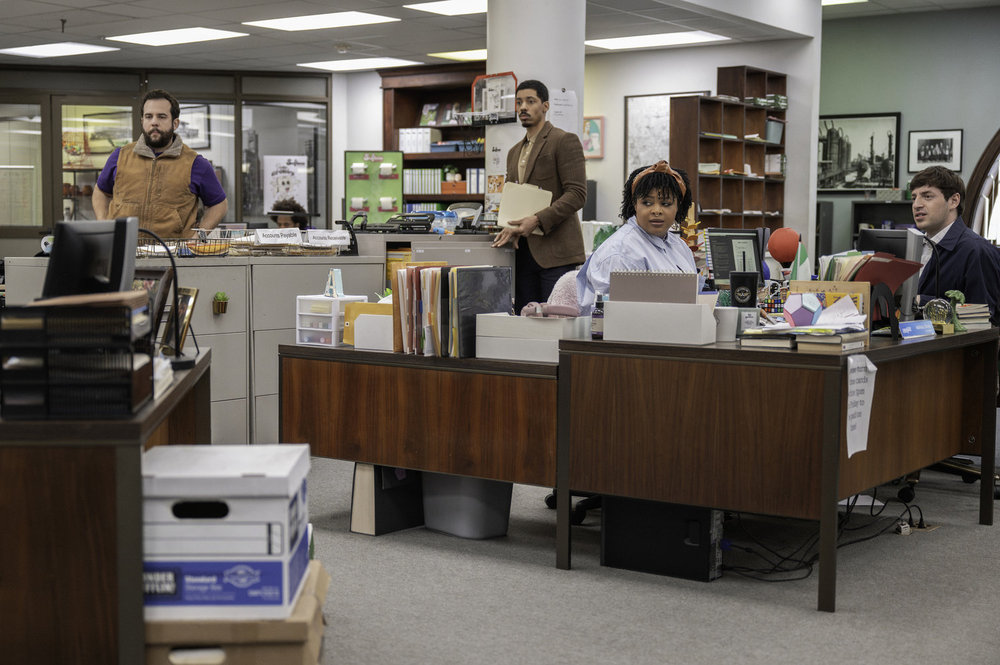
THE PAPER -- Episode 109 -- Pictured: (l-r) Eric Rahill as Travis, Melvin Gregg as Detrick, Gbemisola Ikumelo as Adelola, Alex Edelman as Adam -- (Photo by: John P. Fleenor/PEACOCK)
We controlled all the lights in the ceiling with the help of our dimmer board op, Greg Ladwig, and were constantly making adjustments. When doing an on-the-fly interviews on the bullpen floor, for instance, we’d dim down the overheads on one side of the face to give a little shape. Other times, we would diffuse specific panels over key characters to give a more flattering light.
Arguably the greatest gift on our set were the windows that lined 180 degrees of our floor. They were big crescent shapes (our set is on the 9th floor of a high-rise building), and they provided a great opportunity to incorporate daylight and time-of-day into our world. DJ and our lighting team worked hard to create a realistic sun arc, and we stayed true to it. When we shot scenes that took place at 8 a.m., the sun was low and barely present. It looked much different at midday, and different again at the end of the workday, with warm sun pouring into the offices.
So often in a show of this nature, the sun just isn’t an element — but it’s my favorite part of the world we’ve built. Watching time pass throughout an episode creates more realism and visual interest. I think it gave us real-world issues to deal with too— like the sun being too bright for the characters at times, so we’d adjust the blinds to solve it. There were blinds everywhere in our set and I love that we had to navigate that with every scene. It was such a cool detail, and the ever changing blinds made the set feel lived in.
I wanted to ask how much shaping you had the opportunity to do, but it makes sense that it was more like “Let's just diffuse what we have and stick with the look,” instead of bringing in flags or whatever you might want to be tempted to do.
For speed, and as a result of cross-shooting, we really did keep our lighting approach modest. Also, something we haven’t talked about yet was how reflective our set was — the bullpen was surrounded by offices all made up of clear panels of glass on three of four walls. It was really hard to light anything from the ground because we’d see it in the glass, even with the ability to angle the hinge those glass panels. This forced us to keep a tidy set and to keep any unused gear behind the set walls. Crew members would all gather in a tiny corner of the stage where we weren’t seen, and operators had to be vigilant about checking their frames for bogeys. Flags didn’t get much play on this show.
Eventually, we got savvy and understood the shooting style enough to cheat certain things: remove the pane of glass that was causing a lot of reflections instead of struggling through solving it. In certain instances, which we learned over time, no one can tell. We got really educated about how we could disguise reflections by manipulating the blinds, as well. The on-set dresser stayed very busy with this! In a lot of instances, our cameras were observing private conversations through the glass windows of these offices. We were shooting through the blinds and glass constantly. We developed advanced systems of panning and tilting the glass, pinning blinds together to create bigger gaps, turning lights off in certain rooms to minimize reflections, etc.
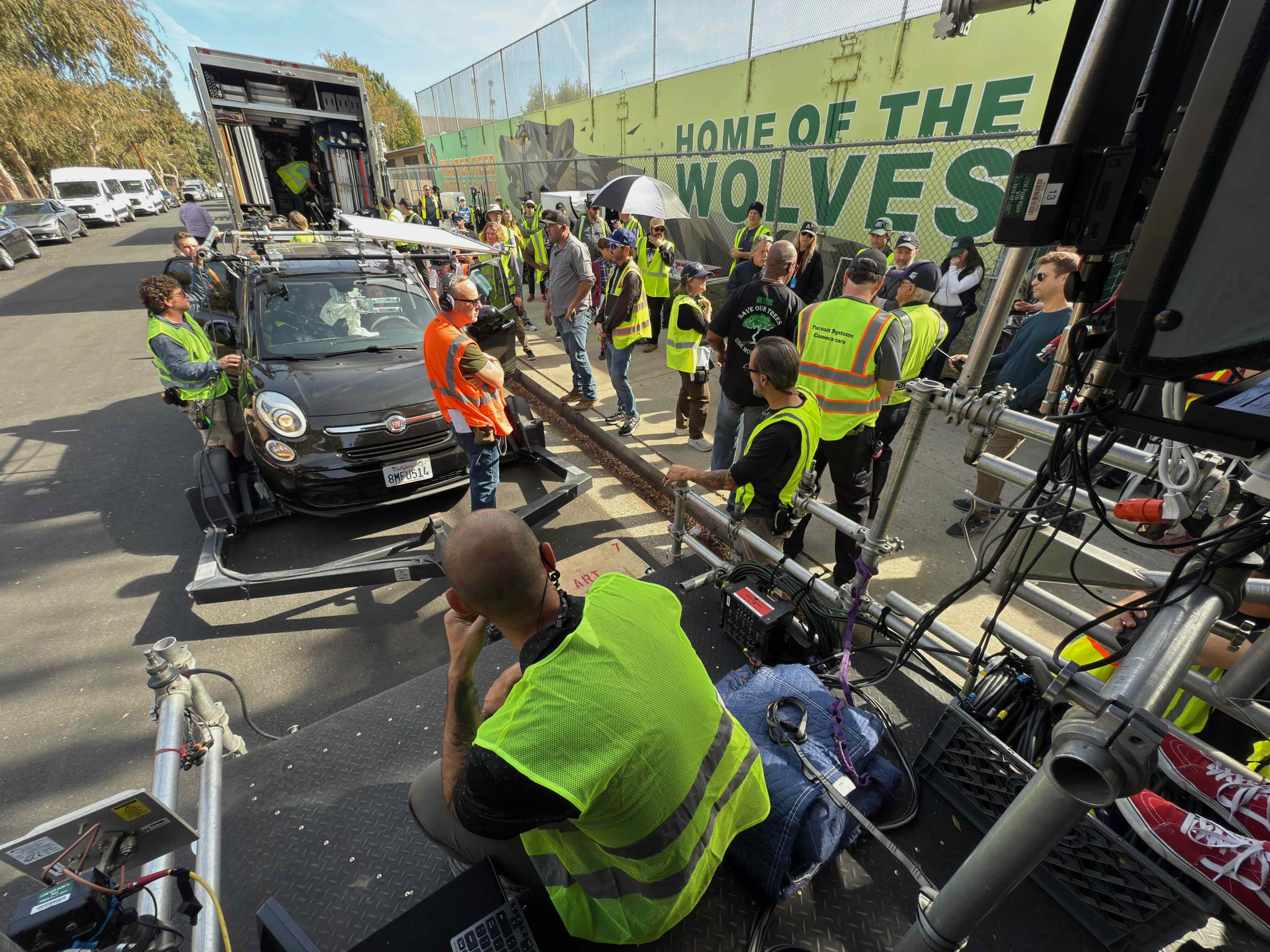
A multi-camera process trailer setup from "The Paper" season one. Photo courtesy of Anthony Martin.
I know you were talking about making sure no one gets caught in a reflection, but with the camera team being so prevalent in the story, was there ever a moment where you felt “It’s okay if you’re visible in this scene,’ or was that something you were trying to avoid?
Greg Daniels, our showrunner, let us know early on that he didn’t care if we saw a cameraman or boom reflected. But maybe from years of doing doc myself, it went against all my instincts to allow that to happen, and we really avoided it. In the edited series, I don’t think we ever see camera people or crew, but we do, in fact, see the boom mics on occasion. This was basically unavoidable.
Cross coverage is crazy for a boom op (and we had two most of the time): two cameras covering the scene in wides and tights simultaneously, all while filming in a reflective box! We all did our best, but it was a challenge, and since Greg had given his blessing, we would sometimes let those go.
Another moment that was really funny, is this sales training video that Ned did when he was a salesman for the toilet paper company. It’s in the spirit of an actual corporate training video, produced internally. What was different about shooting those small segments? It's a really funny gag, because you wouldn’t think that he's got that background when we meet him for the first time.
Agreed, it’s very silly — and the thing we did to contrast our own documentary footage was put the camera on a dolly for the training video. Training videos are always lame, so we followed suit. We captured it mostly in static frames, and we lit the goodness out of it, so it would feel completely different from the world at The Truth Teller. In the corporate video, Ned (played by Domhnall Gleeson) has this slicked-back hair, and he’s seen in the Softees headquarters where the vibe is more wealthy and soulless. In color, the plan was to amplify the colors so it stood out further.
There is a subtle and ongoing joke in The Paper that we hope you notice when watching: two-thirds of the set floor is dedicated to The Truth Teller journalism staff, and then you have one-third dedicated to Softees — the very successful toilet paper brand that makes all the money for the corporation and basically keeps the newspaper afloat. When you watch the show, you can see Softees is rich. Their computers are current, the employees are well-dressed in a corporate uniform of sorts, their light fixtures are nice… it’s wealthy over there. That corporate video with Ned was aiming to accentuate those more distinguished but sleazy attributes of Softees.
Is there anyone from the camera department or production team in general who you’d like to highlight?
Yes! The heroes of our show are our operators, Phil Mastrella and Mande Whitaker — hands down. Their responsibility is immense, and Phil and Mande are total veterans of the format, so we were deeply lucky to have them.
In support of them, we had an amazing camera team led by Tony Martin and Chris Garland, and then later by Brandon Margulies and Estefania Garcia. My dear friend and longtime collaborator Andrew Pauling also joined us later in the season as a focus puller. Chris Hosey was our esteemed DIT and Mike Rush was our loader.
All my departments deserve a shoutout, since it’s hard work to make something fully scripted look like a doc. It takes discipline and restraint in a lot of ways.
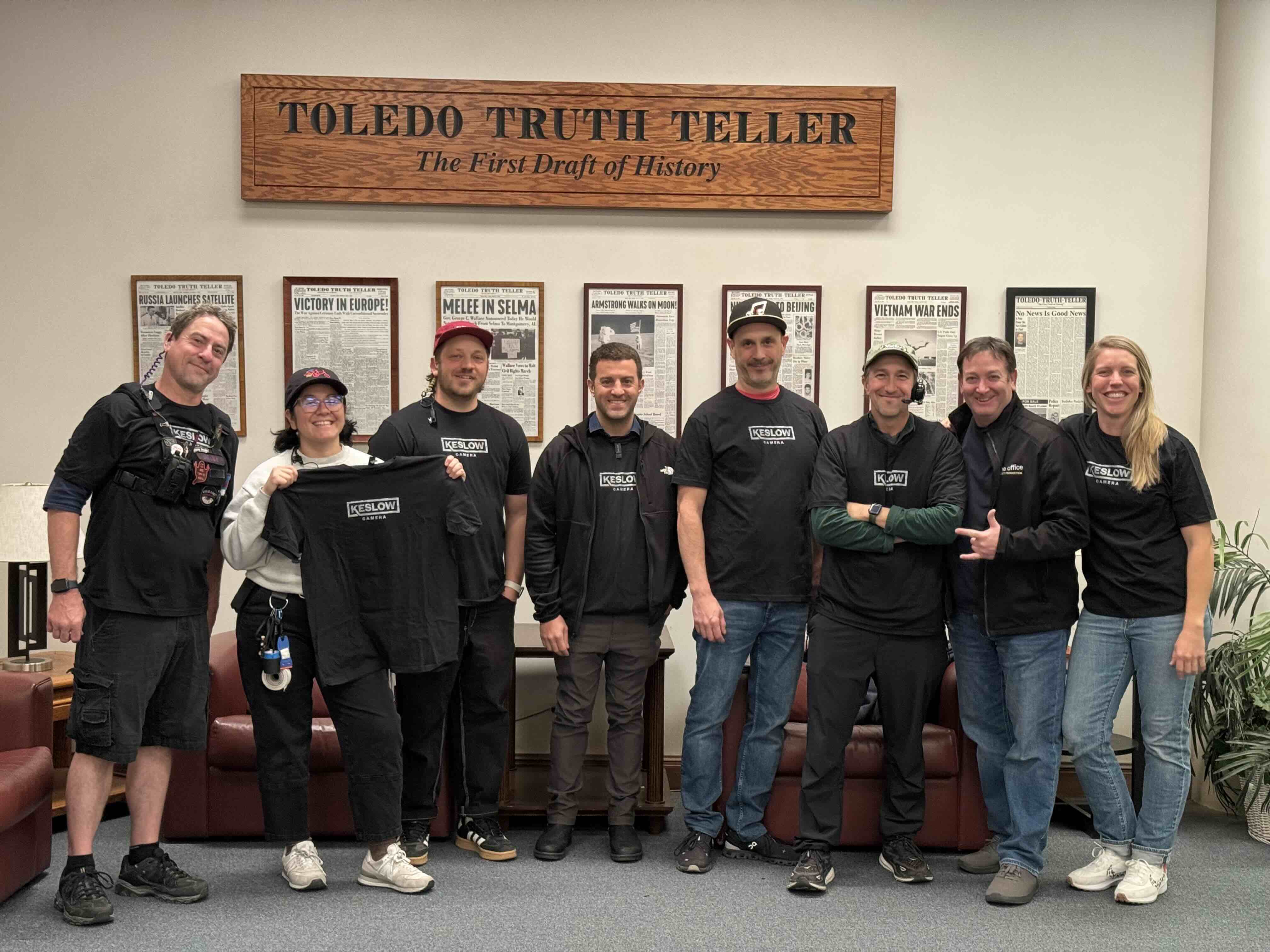
The crew of "The Paper" season one. Photo by Ryan Rosenblum.
Paul Hazard was our gaffer and Bodie Hyman was our key grip. They are both super seasoned in TV and proved to be kind and generous leaders. Their teams welcomed me in when I took over on episode 4, and I’m so thankful for that.
The goal was to make something great, but the priority was that we all had a good time together, too. It was an unspoken direction from Greg when hiring keys that we were looking for good vibes. Let’s all be happy. Let’s all have fun. And we did!
People can get so caught up on the technical or creative choices that they don't even think about the leadership element, and that keeping everyone's moods up and being positive has such a profound downstream impact on how everybody feels on set. There's so many toxic workplaces out there, and maybe this show is about one of them in a way as well. You don't want that to saturate into how everyone's actually feeling.
Yeah, that was top of mind for me. A lot of this crew has been a part of the Greg Daniels universe for years — like our AD, prop and sound teams, who worked on The Office all those years ago, but also the production designer Suzie who did Space Force, David Rogers who has directed, edited and produced by Greg’s side for decades, and many others. There was a palpable sense of loyalty and gratitude for each other everyday.
We understood our roles as new technicians on a set like this was to support the work ethic that Greg had created in the past: to be fast, but passionate, and work with focus and kindness. We took pride in supporting Directors as they came into our world (we had a new director each week, many of whom were also from Greg’s orbit). Our positive energy was important since everyone involved just wanted this to be a hit.
Is there any specific scene or setup that stands out as being memorable when you think about the show? Maybe a joke that a cast member made or something that really just stuck in your mind?
On a show where you’re not doing super-stylized lighting or camera work, one of the great joys was designing blocking. Finding movement that would utilize the office space, provide great compositions, but also feel organic to the scene and story was a constant objective. A scene with compelling blocking to me is a huge win and we had plenty.
Watching Domhnall Gleeson act is something that will also stick with me. He makes it all look easy and plays his character to perfection.
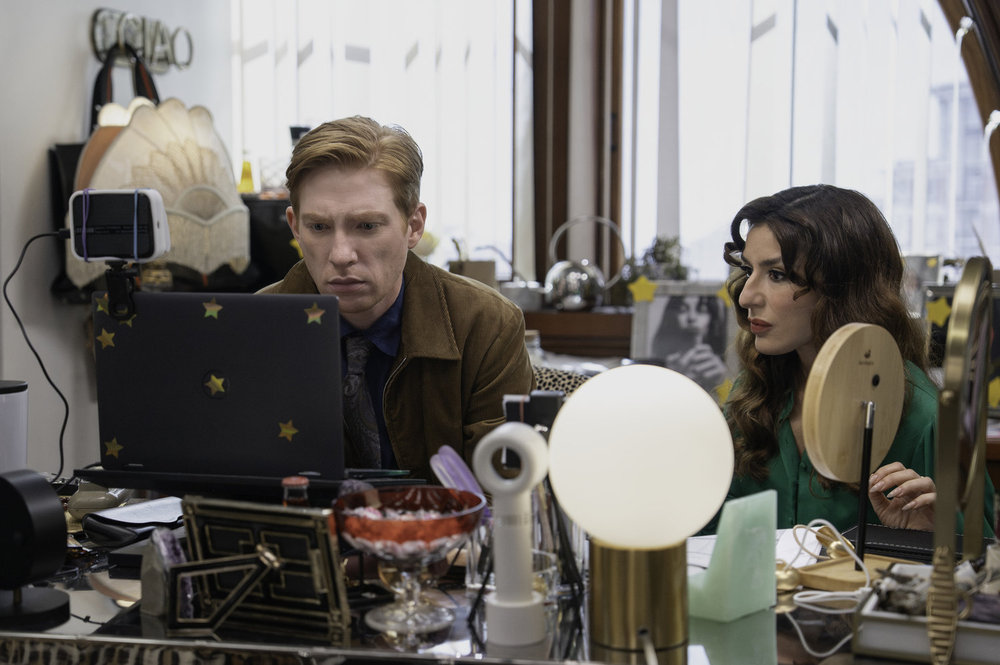
THE PAPER -- Pictured: (l-r) Domhnall Gleeson as Ned, Sabrina Impacciatore as Esmeralda -- (Photo by: Troy Harvey/PEACOCK)
Being on set with Esmeralda, the character played by Sabrina Impacciatore, was also a thrill. She is an actor giving 110% of herself to every single moment of the day. She’s Italian, and every morning she’d greet the set with a joyful “Ciao, buongiorno!” — she was always shouting it, announcing herself to us. She was so warm, funny, driven, and caring. She projected the same kind of wild energy that her character has — and I ate it up.
Other little things have stuck with me, like watching Mande and Phil nail whip pans — so fun. Being witness to actor Eric Rahill’s performance as supporting character, Travis. That dude is too funny. Having nerf gun fights across the bullpen with actor Alex Edelman. Having fun with new directors like Tazbah Chavez and connecting on a personal level was a highlight. And the sheer amount of Uncrustables that sustained me will also never be forgotten.
That sense of camaraderie really comes through. I don't think there would be any way to make a show of this level with the authenticity and quality there without actually having those relationships and having that positive dynamic.
The set had a special feeling about it, for sure. I think Greg Daniels and Michael Koman made great hiring choices — certainly with all the amazing cast, but also with all the iconic directors that passed through our show. We had a lot of important players from The Office, like Jen Celotta, Matt Sohn, David Rogers, Jeff Blitz and Paul Lieberstein. It was a blast every week to create with each of them.
What was the process of working with Keslow Camera for cameras and lenses?
Keslow Camera was a great partner throughout the making of The Paper. Like any first season of a show, we needed continual support as we figured out what exactly we were making.
DJ Stipsen selected the Sony VENICE 2 for the project because I believe he had great success with it before in a similar capacity while making What We Do in the Shadows. The rationale was: choose a versatile camera with an incredible image that would thrust us into a more modern look than the last Office iteration. He paired it with the full-frame Fujinon Premista Zoom series, which had amazing clarity and performance. We shot in Super 35 mode at 6K.
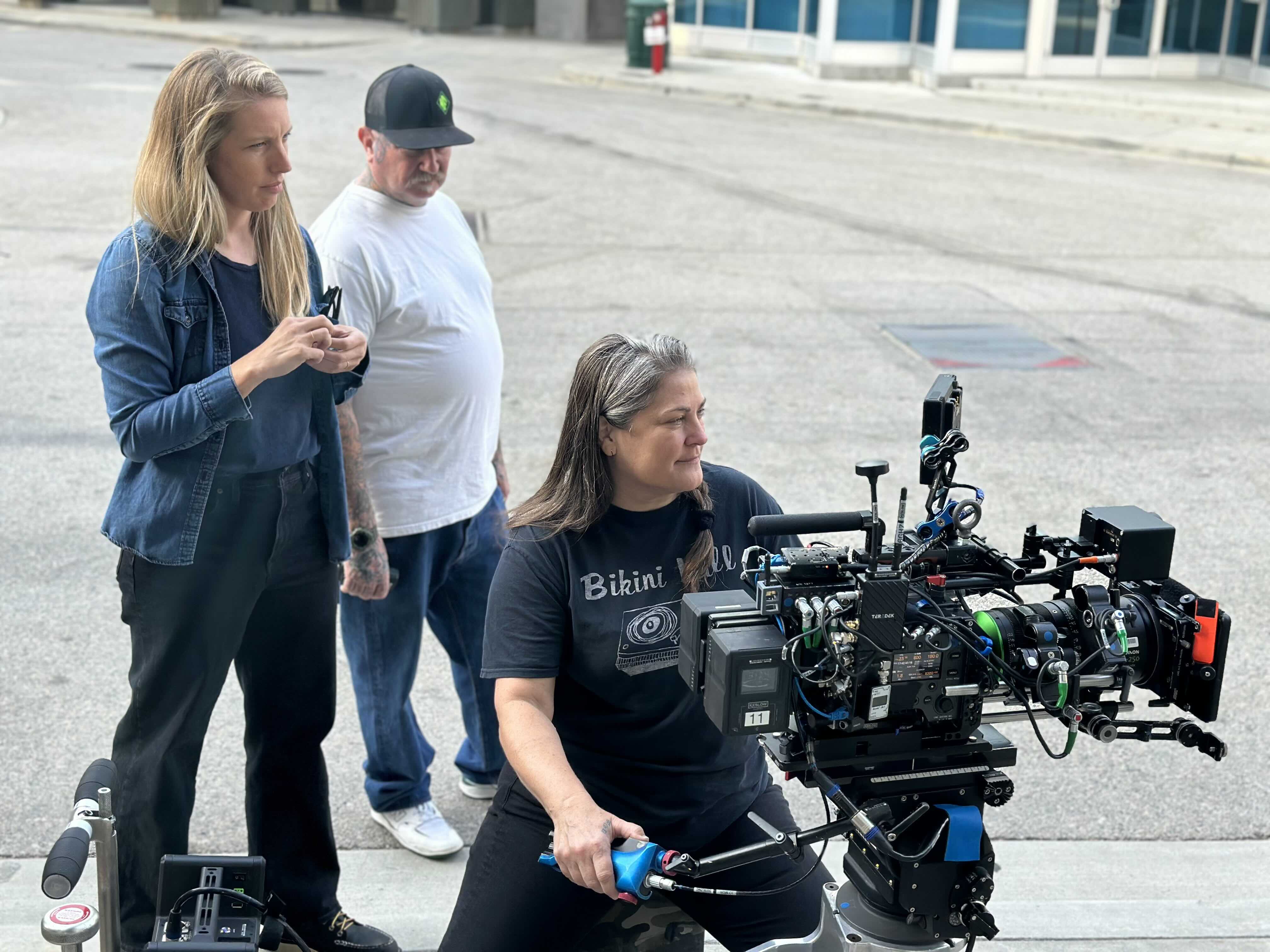
DP Chloe Weaver and Camera Operator Mande Whitaker with a Sony VENICE 2. Photo courtesy of Brandon Margulies.
On our set, we ended up shooting at 1600 ISO nearly the entire time, which was a pretty special feature of the VENICE to utilize without consequence.
I wasn’t around for the early gear decisions, since I took over during episode 4, but there was a bit of a mid-season crisis about lensing that I did navigate with Keslow’s help.
During prep for episode 7, we took an extended hiatus so the writers' room could get ahead on some scripts. During that downtime, there were multiple voices from the team who had worked on The Office that wondered why we didn’t have the same zoom ranges as they did while making that show. In an effort to modernize this series, the beautiful full-frame lenses had been selected, but one thing they didn’t offer was a long range. We were able to achieve all the sizes you’d need to tell the story, but we were in the habit of doing one wide pass and one tighter pass with a lens change in the middle.
Over the course of that hiatus week, we opened up the lens idea... Maybe we could employ a different lens that could give us greater flexibility without a lens change. We tested everything Keslow had in-house and ended up finding the Canon 17–120mm Servo Zoom — and the second we threw that on and tested it in the conference room set, Greg said, “That’s the one!”
I was reluctant to make the change since there was a significant quality difference (the Premistas are brand new and truly immaculate), but it was transformational for the people who had called this into question — and I could also see its value. It was hugely useful to test multiple zooms against one another, since I did have any official prep period myself and it led me to appreciate the various qualities and offerings they each produced. Ultimately, this exercise was an important breath to take in the middle of the series to make sure we were doing the right thing.
A Zoom change mid-season is something that you would normally think, “Oh, don't open up the look of the show while we're already going.” But it matches seamlessly.
Yes, thankfully matching it was easy. It was more difficult mentally, as I felt deeply committed to continuing the look that DJ had set. The show was still finding its feet though and ultimately this change was the right solution to giving everyone what they wanted from the camera work.
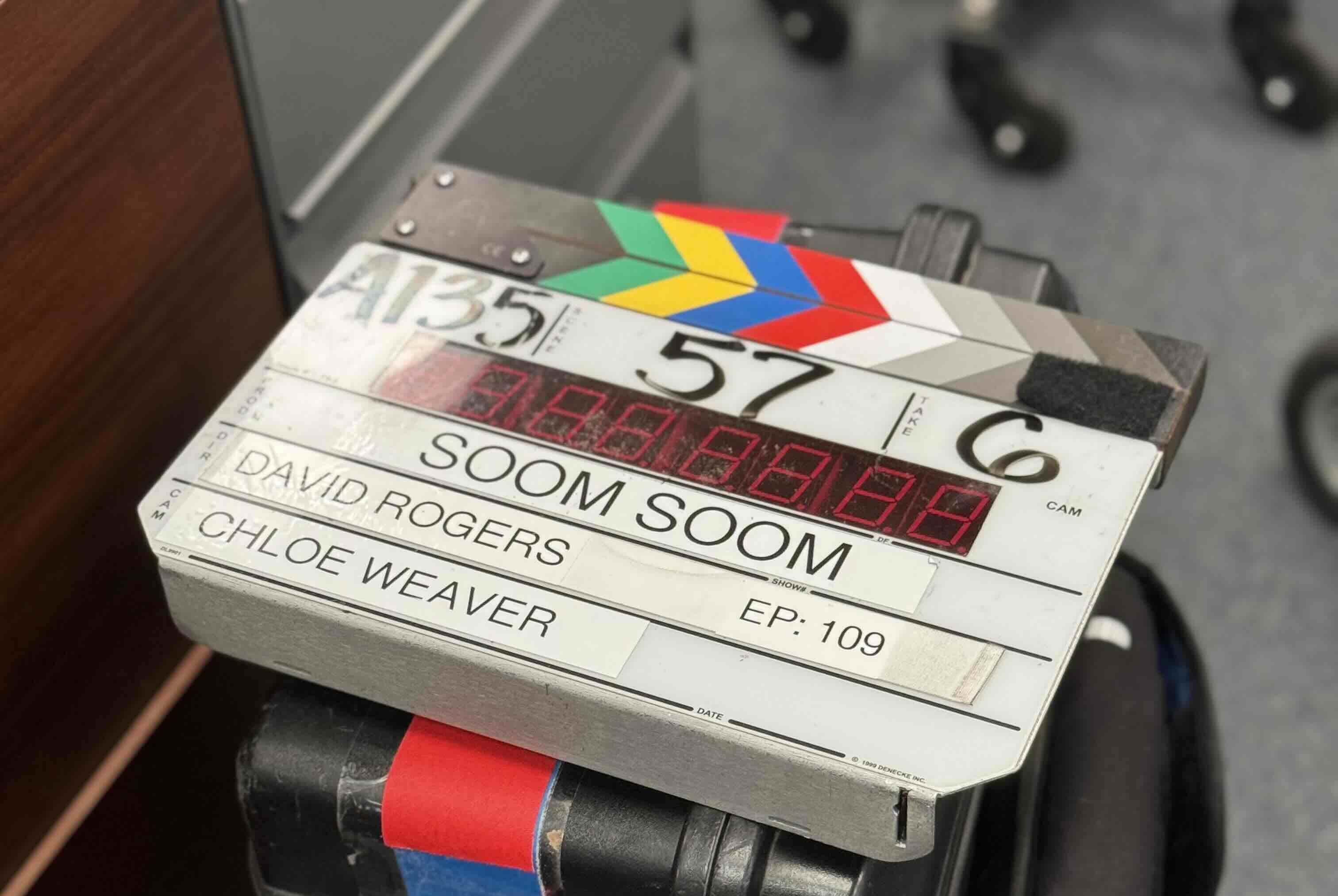
A slate from "The Paper" episode 109. Photo by Ryan Rosenblum.
What is something that you're taking away from this project to the next one?
I learned an infinite amount of things making The Paper... it was definitely my biggest opportunity to date. But to pinpoint a few things:
I learned about managing my G&E rigging team. Without a lot of time to prep between episodes (zero in fact), I put my faith in them and into DP Alan “Gwiz” Gwizdowski, who would do all the advance scouting and planning for the upcoming episode. Everything I learned I would do better with another chance at it - Gwiz taught me a lot about how to plot lighting in a structured way and relay notes to other departments with professional efficiency.
I took away a great appreciation for radio etiquette…. finding a balance of how much feedback to give my operators on a show like this took time. I’ll always be working to strike the perfect approach to that.
As a perfectionist, nothing would delight me more than a second opportunity to shine in a second season. I was under the wing of a very veteran DP last season, but it would be great for my career and for myself to get the opportunity to lead season two. I’m just putting that out there!
We're manifesting that one for you, too, absolutely.
Either way, I will go on to do more comedy in my career and I am a stronger DP and collaborator because of this incredible experience on The Paper. [x]
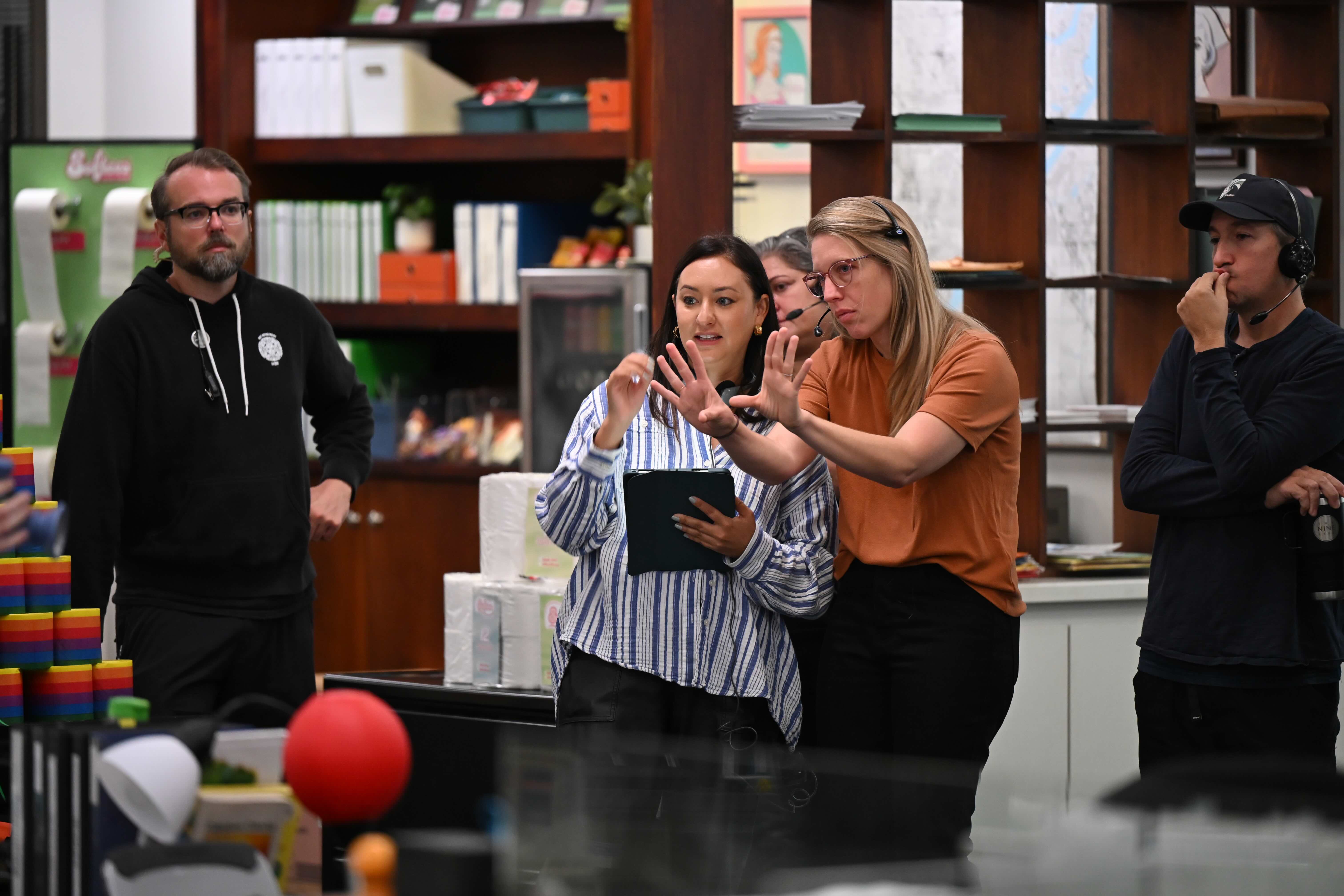
DP Chloe Weaver discusses the next shot on set of "The Paper" season one. Photo courtesy of Chloe Weaver.