

The Cinematography of "Untamed" (Part Two) with DP Brendan Uegama, CSC
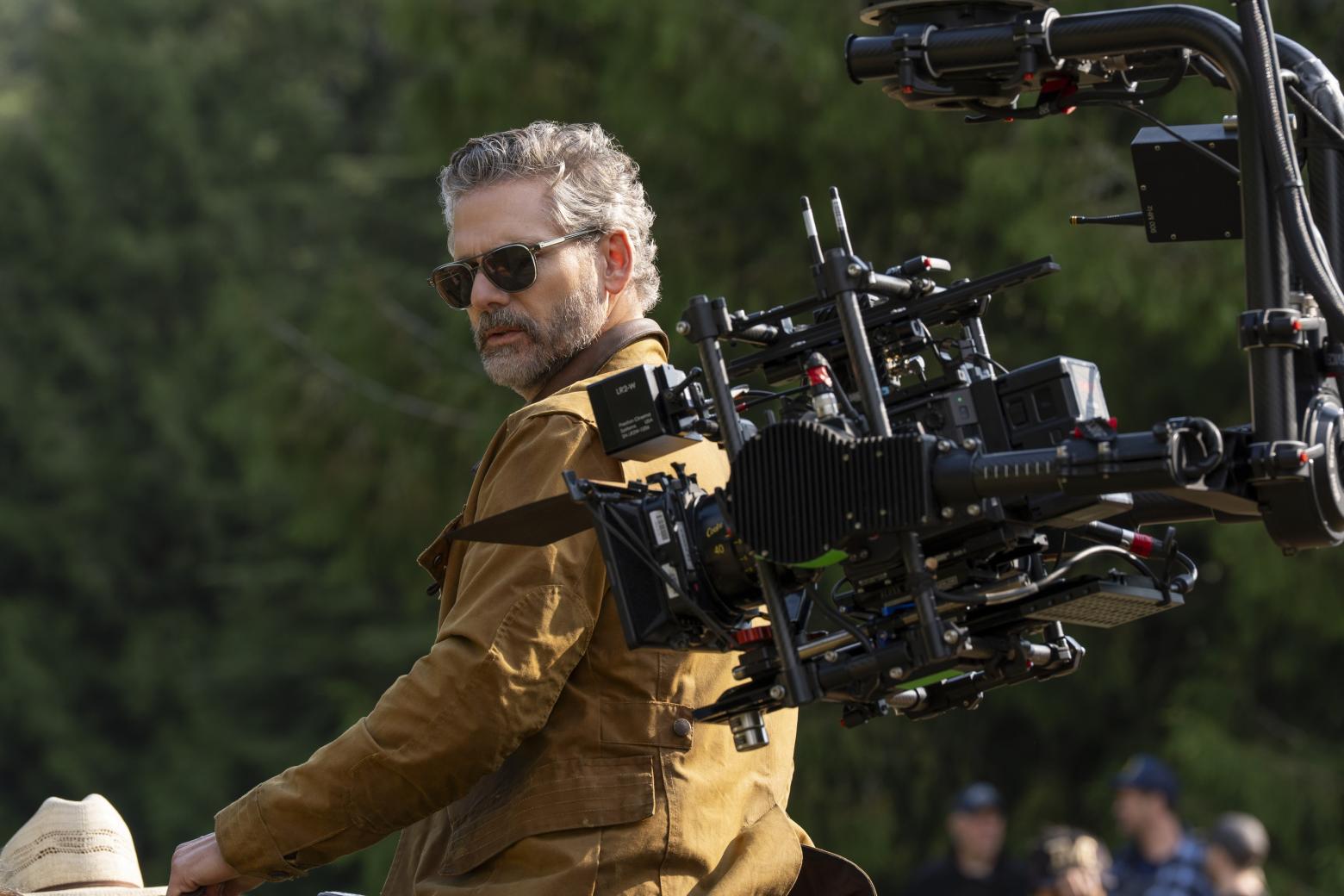
Eric Bana as Kyle Turner in episode 104 of Untamed. Cr. Ricardo Hubbs/Netflix © 2025
We spoke with middle block DP Brendan Uegama, CSC (Episodes 3-4) to continue our exploration behind the making of UNTAMED - shooting claustrophobic caves, filming from helicopter-to-helicopter, collaborating with DP Michael McDonough, ASC, BSC, and more.
[This interview contains minor spoilers for UNTAMED]
Before we connected, I got a little bit of insight into how the shooting blocks for UNTAMED broke down; one major aspect that Michael let me know was handled during your block, were the aerial shots throughout the entire season, which are obviously a huge part of the connective tissue of establishing this nature setting. I was curious to get your insight into the process and approach for these aerial sequences, particularly the helicopter set piece.
Initially, when the director, Nick Murphy, and I first began breaking down the helicopter sequence, it was scripted as a brief scene of them flying over the hills looking for a mine entrance in the mountain range. The initial conversation about how to do this, was to put a blue screen outside the helicopter windows, and then get plate shots and some other aerials of the landscapes.
I didn’t like that idea, and even though it was the first time Nick and I were working together, we both had the same desire to shoot as much practically as we could. I wanted to see the ‘mistakes’ in the photography, the unpredictable light shifts as the helicopter would move, the effect of sunlight coming through the spinning rotors on the actor’s close-ups, the sensor being stretched as the sky neared clipping - I wanted to feel the characters in the air with the mountains rushing beneath them.
So we made a plan to shoot the dialogue between Turner and Vasquez practically while flying in the helicopter over the mountains. We shot both helicopter-to-helicopter and also with a handheld camera inside the picture helicopter. We only had one day to get it all, so we had to come up with a strong plan in prep so the day could move very smoothly, as we had limited time with the helicopters.
We shot this sequence in the backcountry near Whistler, BC. In prep, we scouted with Blackcomb Helicopters. As we were scouting, we started finding extra moments to capture that could be utilized throughout the episode. Like a fallen log over a river for Lucy to cross, Pakuna on the top of a mountain as he’s heading to a mine entrance, and Turner on his horse near the river. Those discoveries went back into the script, allowing us to create more narrative through our helicopter work.
For me, the success of that sequence came from treating the landscape as a character, letting the camera feel the movement of the helicopter, the air up there, and the rugged terrain. Helicopters feel kinda dangerous, and capturing that threat into their performances is what makes this scene special and allows the audience to sense that.
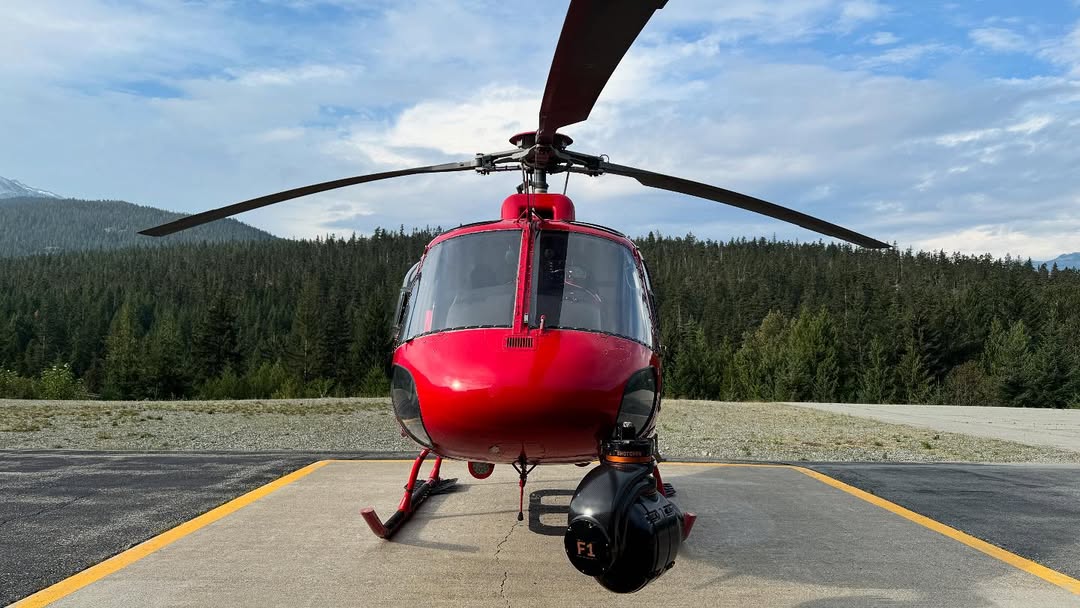
One of the picture helicopters on location for Untamed. Photo courtesy of Brendan Uegama, CSC.
The caverns and tunnels, which are a recurring setting that gets introduced during your block, feature tight caverns, especially in the old gold mine, where Vasquez gets trapped in this very constricted space. This also continues to the tunnels that lead us to this pivotal drug den of sorts. What was the process like for these sequences? I assume that the majority of those were on stage.
Almost all of the tunnel work was done on stage, with the exception of a few exterior locations in the mountains where we shot entrances and exits. All the interior work of them walking through the tunnels, where Vasquez crawls and gets stuck, was built on stage.
In prep, we mapped out the sequence in terms of story beats - where we needed areas of elevation, some climbing up and down ladders, crawling through the tunnel, falling, and the main drug den cave that comes at the end of episode 4. The set filled an entire sound stage and had enough variation in layout to give the actors real physical movement through the space for quite a long walk.
When it came to lighting the tunnels, initially, I planned removable sections in the sets to have soft overhead sources to gently open the space and bring some depth into the tunnels. But as the shoot approached, I kept asking myself how I would light this if we were inside a real cave without any light around?
I chose to embrace that approach, and relied only on the actor’s flashlights to light the scene. Although I’ve done this before, for this sequence it felt essential to be pure and raw. When we shot, it was only their flashlights and bounces, or the rare handheld light off camera. Then, I allowed the rest of the frame to fall off into complete darkness.
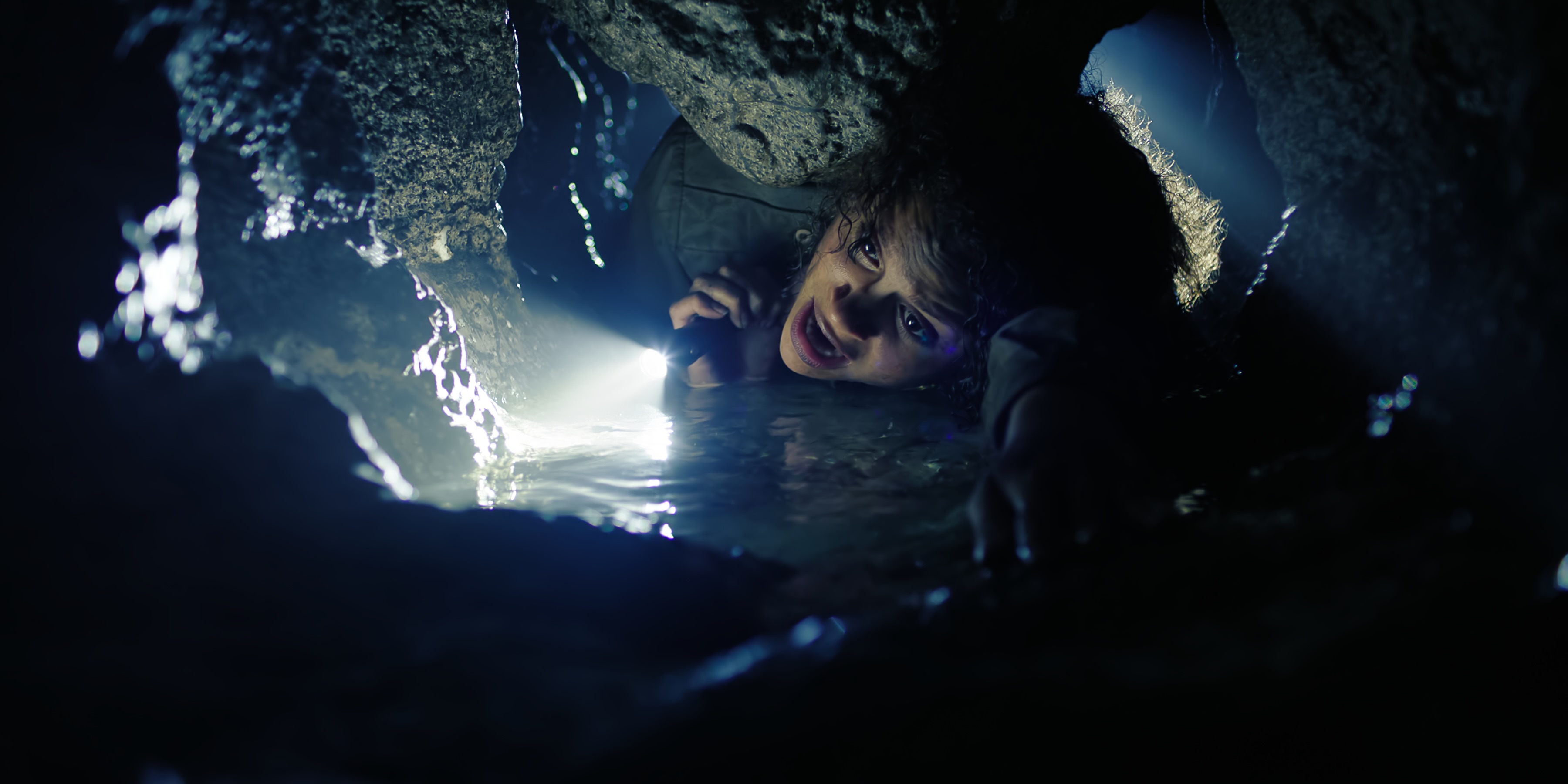
Lily Santiago as Naya Vasquez in episode 103 of Untamed. Cr. Courtesy of Netflix © 2025
It comes across extremely natural. All of those little touches to ensure that they're lit work very effectively. For that moment specifically, within the channel where Vasquez is crawling, and it starts flooding with water - what unique challenges came up during that sequence, especially with the water and such a constrained space? Did you want to strip the camera down and adjust the setup in any way?
Yes, that part of the sequence was definitely challenging. To make it feel like a real struggle, we designed that part of the tunnel to have rocks in certain areas that Lily would have to push past to feel the claustrophobia. She could barely get her shoulders through parts of the set. It was very small!
To shoot the scene, we stripped the camera down and mounted it on a long truss that stuck into the tunnel about 20 feet. We mounted the camera at the end and pulled it on a dolly, allowing us to move smoothly and stay close to Lily as she moved through the tunnel and pushed the camera back.
We knew we needed other angles too, especially profiles to capture the water and rocks as she struggled to get over them. So, we cut a side channel out of the set to stick the camera in for profile shots. We shot this all on a wide lens to keep the feeling intimate and close.
We also had to figure out how to make Lily get stuck. The top rock that pins her was made from loose foam, allowing her to squeeze under it. It was light enough that if she felt uncomfortable, she could press up and the whole rock would come out, since it only weighed a few pounds. But this rock was the main point of her getting stuck. So it was important to get it built in a way that she could barely squeeze under, and would be believable to get stuck by.

Lily Santiago as Naya Vasquez in episode 103 of Untamed.
For the flooding, SPFX built a small water tank at the end of the tunnel that would slowly fill up. And as it did, the water would spill over the edge and into the tunnel, which was slightly sloped, to allow the water to run down naturally towards her. It pooled a bit right where her face was, to make the threat of her drowning there more intense. Lily was able to really sell the feeling of drowning by putting her mouth in the water, but she always had the safety to lift her head up and press that foam rock above her away.
It's definitely one of the scariest scenes in the season, especially if you're a little bit claustrophobic.
Yeah, for sure. And she was! I think Lily herself felt a little uncomfortable with how tight it was. She was a champion and knew she was safe, of course.
It definitely gives you something to grab onto as a performer, when you’re really feeling like you're stuck somewhere like that. I've heard a lot about those cave divers that do that for fun, and it's intense.
Yeah, that's crazy, isn't it? I don’t know if I’d do that!
Jumping around a little bit, in episode three, one of the most stylish scenes that stood out to me throughout the season, is the hotel room scene when Turner and Lana (Alexandra Castillo), the hotel concierge, are having their affair. There's this beautiful shot of them lying in bed together, with this tungsten light pouring in, where it’s freckled all over them, but it's still quite dark. I was wondering what the process was for that scene and how you landed on that very unique look?
That scene was actually tougher than it looks. From the start, I wanted to avoid anything that felt artificial. I decided against using moonlight coming in the windows.
Early on, I suggested the hotel room faced the parking lot with a streetlight outside, so we could motivate a warm, sodium light pushing in through the windows. Then, we added the idea of making it rain, which created a moving, fractured light pattern inside the room, giving it a dark, intimate mood.
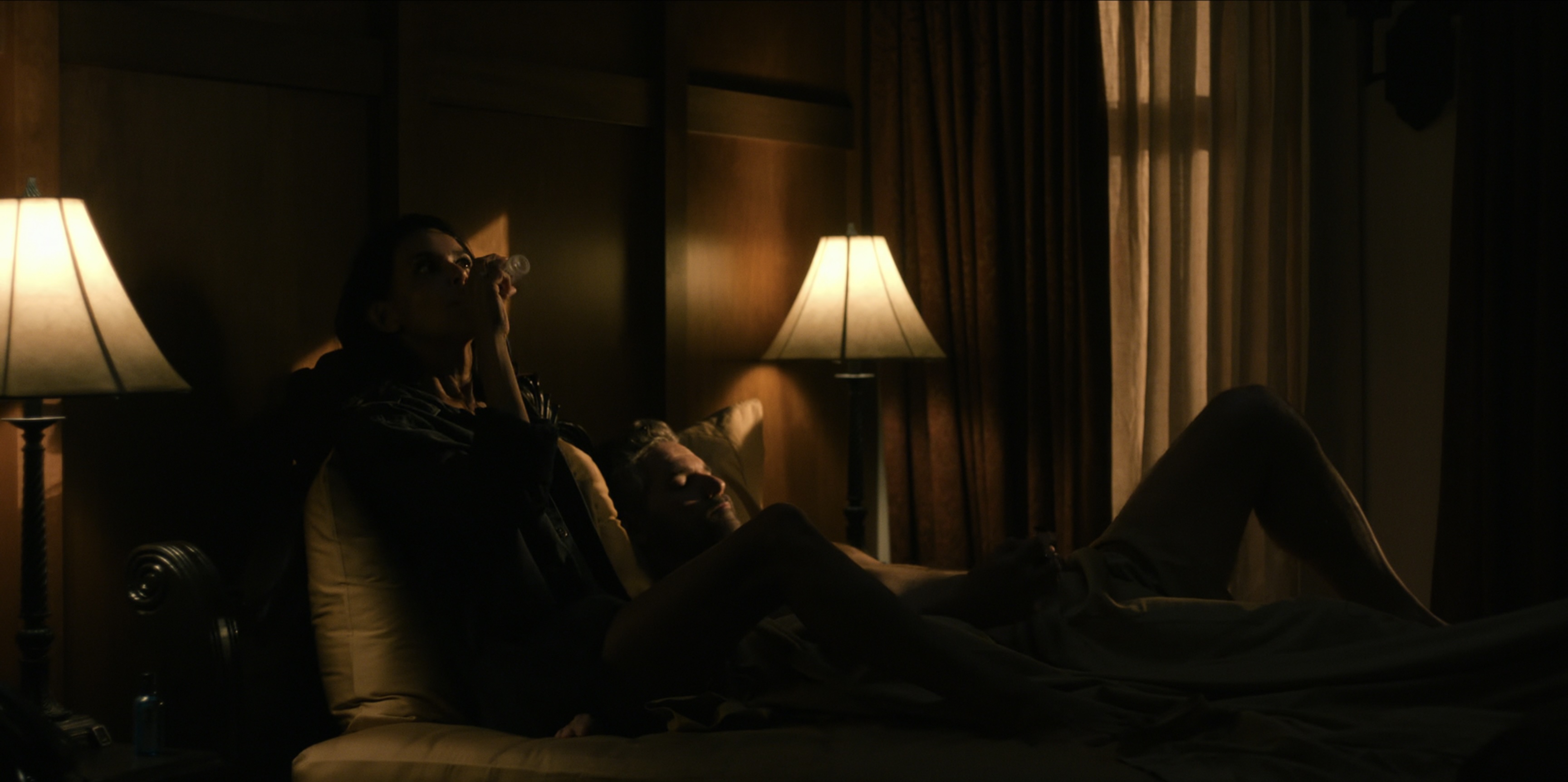
Alexandra Castillo and Eric Bana in episode 103 of Untamed.
The hotel lobby and bar were shot on location, but the interior of this room we built on stage. I knew we needed our lights at a good distance to get the right look. Because there were other sets so close to this one, we couldn’t place lights far enough to get a crisp pattern from the water on the back walls. So we decided to use mirrors and reflect the light back in, effectively doubling our distance of light, which helped. When special effects added the rain on the windows, it all came together.
It definitely has a real mood to it, especially reflecting where Turner is in that moment. He’s at such a low point. It’s an excellent visual emphasis of his internal struggle. On your collaboration with Michael in general, what was that like coming in and shooting the middle block of a series? Obviously, you're very seasoned in the film and television world, but was there anything unique about your collaboration? How closely did you work together when you were determining the process for everything?
When I arrived in Vancouver, I sat down with Michael early on, and we talked about his theory on how he set it up in the first place, and why he chose certain gear, and his outlook on the show. For me, that was great knowledge for my baseline approach. At the same time, my sensibilities for the scripts I was working on led me to the filmmaking approach I ended up doing. And Michael was very supportive of all of that. He’s a fantastic cinematographer, and he knows that the episodes I was shooting had their own story within the grander series that I needed to translate.
The rest was dictated by the location, the scene, and what was happening at the time in the story. That's how I approach everything. When I've done series’ that I've started, or not, it's the same thing. I always feel you have to know that every episode has its own elements that have to be taken into consideration, and you have to be able to work efficiently and react how you would as a cinematographer.

A behind the scenes shot on set of episode 103 of Untamed. Still courtesy of Brendan Uegama, CSC. Click here to view the full clip.
In terms of the physicality when shooting in the wilderness - is there anything that stands out to you, looking back, a specific moment or sequence that was particularly challenging?
One that comes to mind is back to the mine tunnels, specifically the moment Vasquez falls down the mine shaft. This was a big challenge in many ways. We had to build a really large, 30-foot-tall set in our studio that had a collapsible top. One of the things that Nick said to me early on was, "I don't want it to feel like it's just cameras from random places. I want to feel like we're with her.” I was like, “Okay, let's put a camera operator on a bungee and fall with her.” That way, we can be close and intimate.
So, on wires hanging above the set, we had a stunt double for Vasquez, and a cameraman who was a stunt guy. He handheld the camera, and we let them both drop at the same time so he could fall with her. We actually had two hits in what we shot, but I think they cut out the first time she slammed into a beam. So, it was a lot further of a fall than what you see in the episode. It was meant to make the fall feel powerful and painful. I think it achieved that. It was a pretty shot to design and do, and was one of my favorite shots because it was super challenging and turned into something pretty visceral and unique.
Another scene that stands out is when Vasquez searches for the mine entrance, followed later by Turner tracking her on horseback. Although it may cut together looking quite simple, this sequence was complex to organize and shoot. For me, the main thing to get right was to maintain a consistent time of day across multiple locations. Many shots were filmed on different mountain ranges, which were done on different days, as some locations were hundreds of miles apart.
Because we wanted to show Vasquez during midday with the sun high, and then Turner tracking her again at dusk, we often repeated setups at the same locations hours or days apart. So we would shoot a shot with Vasquez, then move on to other scenes in different locations before returning for Turner’s sequences.

Eric Bana on horseback on set of episode 103 of Untamed. Photo courtesy of Brendan Uegama, CSC.
The beat where Turner is tracking her on horseback, coming down into a small valley in the rain, was really physical for the crew. He’s at the bottom of this small, dried-out river at dusk. Usually, I avoid lighting exterior scenes during the day if I can, but in this case, I did. We set up a row of large 18K’s and 9K’s off camera, positioned on the ridge above, shining down to backlight the rain and give Turner an edge to help separate him since it was darker in there.
This turned into a massive effort. Getting all the equipment up to that remote, difficult location was one of the hardest logistical challenges we faced. I’m very thankful to the crew as they worked very hard on this!
On that note, in terms of the crew that you were working with, is there anybody that you want to highlight their contributions that really help bring everything together?
This was one of the most physically demanding shoots I’ve been part of, especially for the crew. Everyone did such an amazing job! Our gaffer, David Warner, is fantastic. I worked with him before on Child’s Play. I also worked with key grip Reid Cohoon before. Both of them made huge contributions to the project. Our camera department was solid with 1st AC Patrick Stepien and the camera operators all doing excellent work. Michael McDonough assembled an incredibly strong crew, and I was lucky to step in with them.
You have worked with Keslow many times in the past. What's your relationship and background like working with Keslow?
Yeah, I’ve been working with Keslow for years, and have done many shows with them all around the US and Canada. They’ve been incredibly supportive throughout my career, and many have become good friends. I can always count on their team, their equipment, and their willingness to help me get what I need.
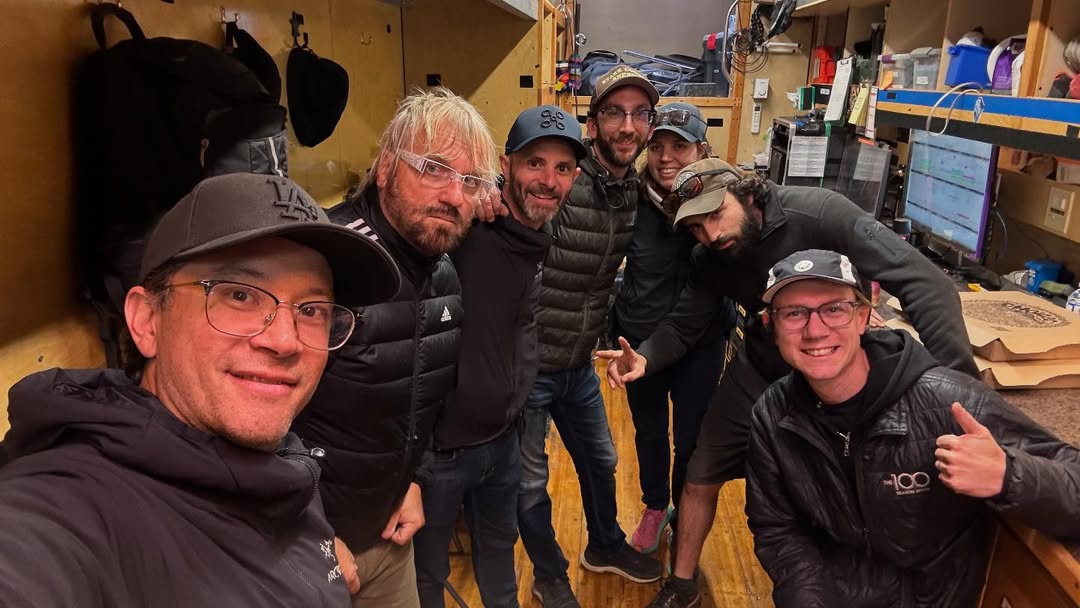
DP Brendan Uegama, CSC, on set of Untamed with the camera department crew. Photo courtesy of Brendan Uegama, CSC.
To cap things off, I usually try to get some advice for rising DPs, and I was wondering if you had any thoughts on the ideal way to approach collaboration, especially when you're coming into a show where you're not the DP who set the look. How do you approach collaborating with another DP, and how do you facilitate that in a smooth and effective way while still being creative?
When you come in as a second DP, your first priority is the show. In order to do that, you must understand the established look - why certain choices were made for camera work, lighting, lenses, etc. You have to embrace all of that. You don’t want to create something completely different. You have to (and should want to) build on what’s already there.
At the same time, each scene you shoot is new, not part of the first block or episode. So, you need to find your own creative ways to tell those new parts of the story using the tools available.
If you get stuck worrying about gear choices, or what you didn’t get to pick, you’re focusing on the wrong things. The gear should serve the story and aesthetics already established. Once those are set, your job is to tell the story through the camera, lighting, and use the environment and sets to represent the characters the right way.
All the technical decisions made before you arrived are behind you, and your focus should be on what’s ahead - the storytelling. That's why we are all making movies and shows anyway. It's not about the technical - it's to tell great stories. [x]